How an old palace and a historic railway station lay bare China’s conflicted relationship with its past
Old Summer Palace being digitally recreated in capital, even as historic railway station just metres away gets torn down

China’s contradictory approach to protecting its heritage can be seen in Beijing, where researchers are digitally recreating the Old Summer Palace while a century-old railroad station is demolished metres away.
A team of some 80 experts at Tsinghua University have been using virtual reality technology to recreate the Old Summer Palace, or Yuanmingyuan, in what has so far been a 15-year effort involving thousands of historical documents, drawings, and models. The team, led by architecture professor Guo Daiheng, announced last month that they were 60 per cent through the restoration project, according to a report from The Beijing News.
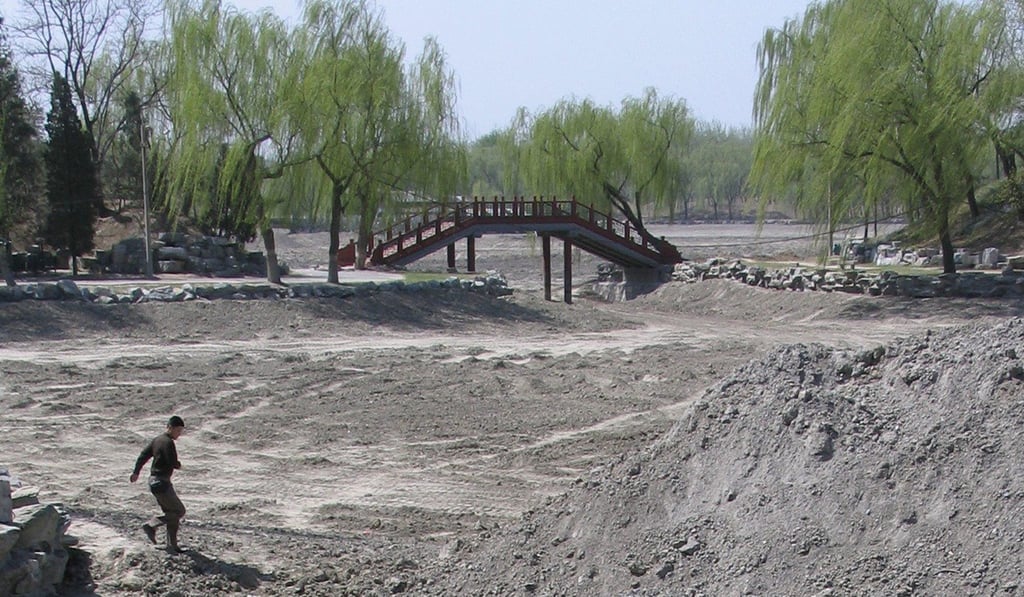
Built during the Qing dynasty (1644-1911), the Old Summer Palace – known for its imperial gardens and treasured collections – suffered from looting and wreckage both in wartime and in the aftermath of the Cultural Revolution. Its earlier destruction is still a sore spot for many people in China, a reminder of a “century of humiliation” that ended in 1949, suffered at the hands of foreign aggressors.
But just metres away from this restoration is the old Qinghuayuan railway station, which is being redeveloped to become part of a new high-speed rail line.
The station was built in 1910 and designated as a municipal cultural relic in 2012, but that did not stop it from being officially closed last November. Its replacement, the Beijing-Zhangjiakou Intercity Railway, is slated for completion in 2020, ahead of the 2022 Winter Olympics in Beijing.