Beijing plans to move 15,000 villagers away from its 600-year-old Ming tombs
Residents will be relocated to a nearby ‘eco-friendly community’ so that the Unesco-listed site can be restored and have an 80km wall built around it

Beijing is planning to relocate about 15,000 residents away from a World Heritage Site where 13 emperors and 23 queens from the Ming dynasty were buried.
Some 16 villages spread across an area of 87 sq km are to be relocated as part of a plan to close off and restore the complex, Zhang Yanyou, head of the Changping district government, was quoted as saying in Beijing Youth Daily on Sunday.
The plan is to eventually open all 13 of the Ming emperor tombs to the public once restoration work is completed, Zhang said. Visitors can access just three of the tombs at present.
Families who’ve lived in old Chinese town for generations being kicked out to make way for tourists
The collection of mausoleums – known as the Thirteen Tombs of the Ming dynasty – is a popular tourist attraction located about 50km northwest of downtown Beijing and was added to the Unesco heritage list in 2003.
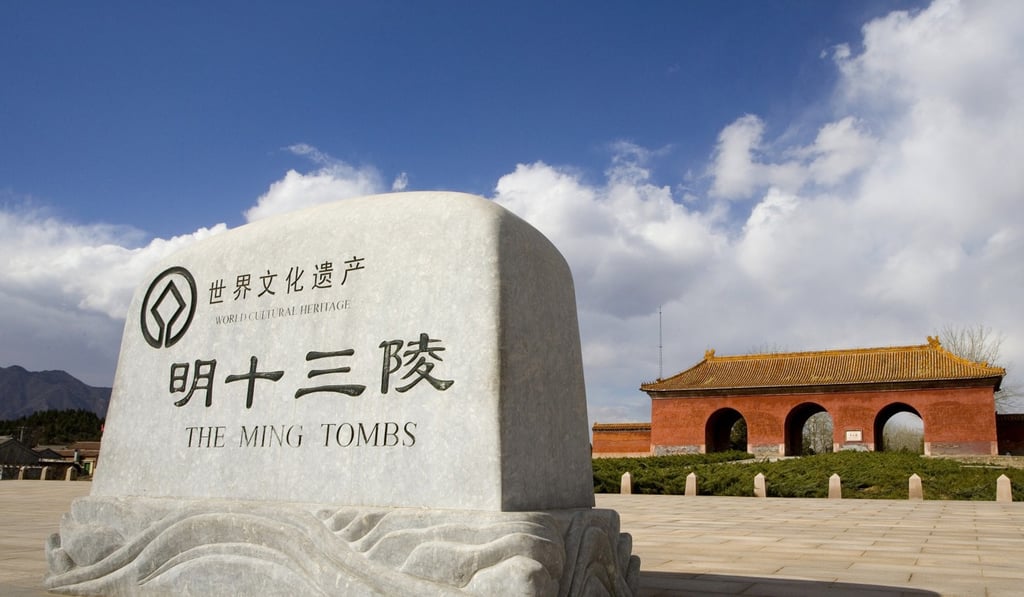
As well as the emperors and queens, it is also the burial site of two princes and more than 30 imperial concubines who lived between 1409 and 1644, the year the last emperor of the Ming dynasty, Chongzhen, committed suicide and was buried there.
About 15,000 people – some of them descendants of tomb guards – live in the area surrounding the tombs, which is mainly farmland including cornfields and orchards.
The villages they live in are dotted around the mausoleums and the authorities say they are hampering preservation work. The government promised to move the villages back when it applied to the UN heritage body for the tombs to be listed as a World Heritage Site, but until now it has not taken any action to relocate them.