How many Hongkongers are really living in poverty?
According to one calculation over a quarter of people are on the edge of poverty, but some critics of relief efforts argue the statisticians have got their sums wrong

As Hongkongers get fired up and ready to celebrate the 20th anniversary of the city’s return to China in just over a month, the government seems equally psyched up and has taken every opportunity to brag about its achievements over the past two decades.
During a function in April, Chief Secretary Matthew Cheung Kin-chung proudly announced a string of impressive statistics: since 1997 the city’s gross domestic product had grown by an accumulated 82 per cent, employment had gone up by 20 per cent, while the monthly incomes of full-time employees had surged by nearly 70 per cent.
But the administration was less keen to shine a light on the city’s shameful poverty rate, which stood at 14.3 per cent in 2015.
The concept of drawing up a poverty line was initiated by none other than chief executive-elect Carrie Lam Cheng Yuet-ngor in 2012 when she was chief secretary and a former chairwoman of the Commission on Poverty. The poverty indicator has since been repeatedly cited as one of the major achievements of the administration because it is viewed as a symbol of determination to alleviate poverty.
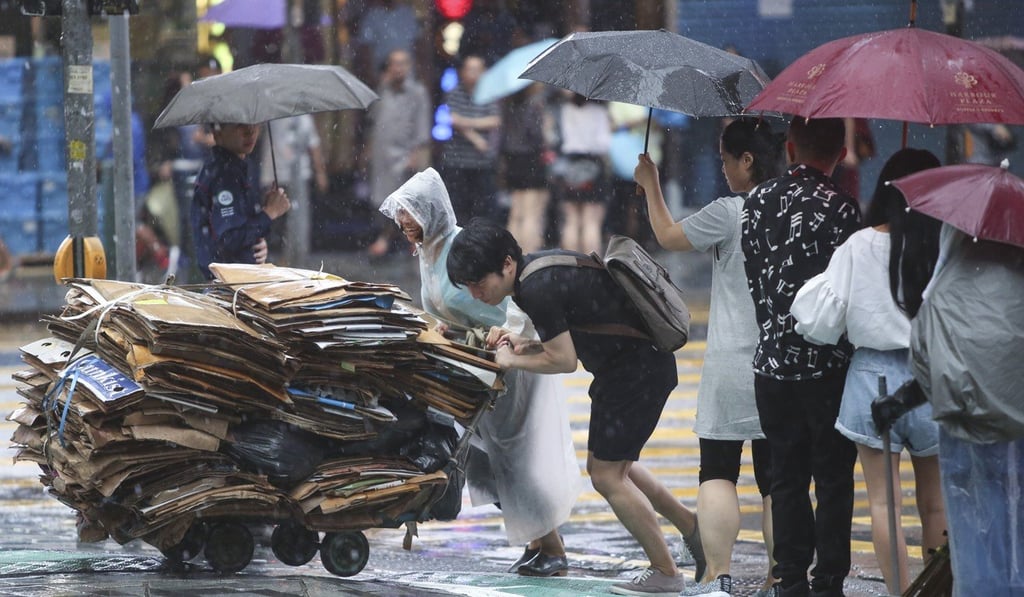
If that did not demonstrate the severity of the situation, the official poverty report published in 2016 also studied the concept of households at risk of poverty, where the threshold of median monthly household income was raised from 50 to 60 per cent, which consequently exposed another underlying problem.