Hong Kong researchers pioneer use of 3D printing for faster, safer heart surgery
Chinese University and HKU introduce technology to create personalised models of complex heart structures out of silicone
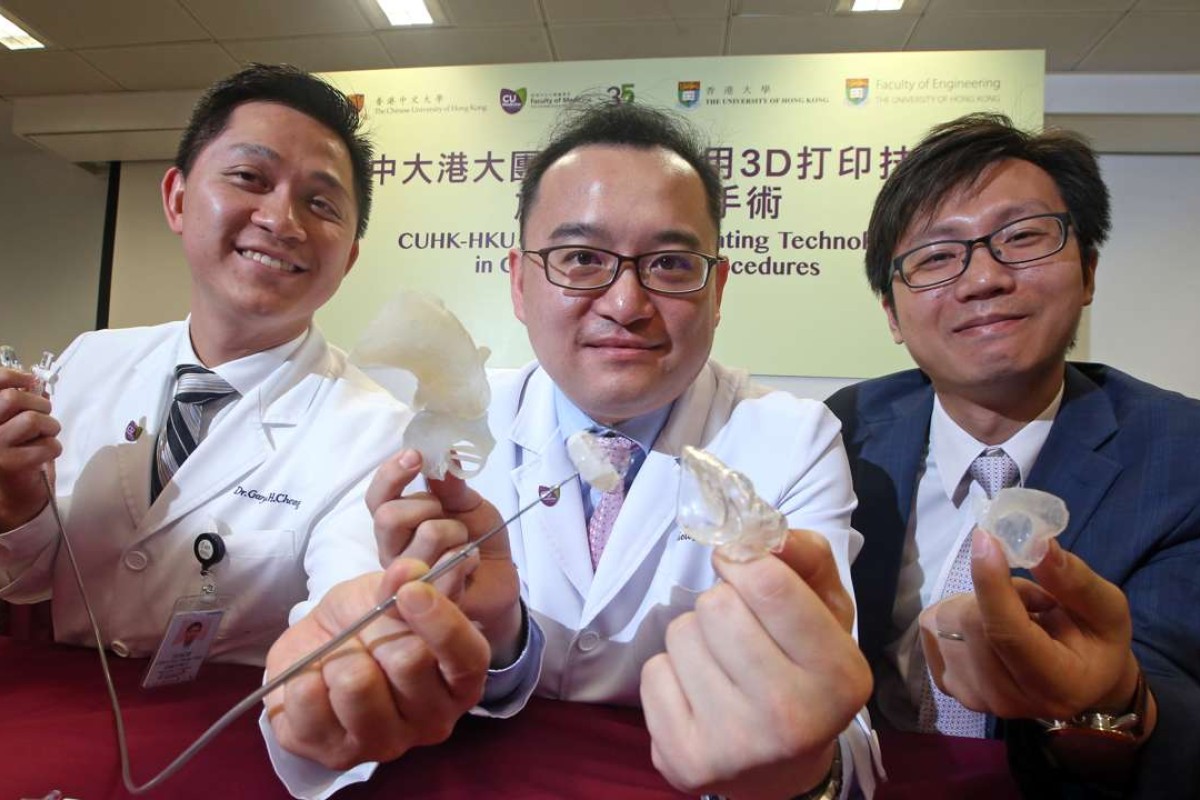
Personalised models of complex heart structures can now be created with the latest 3D printing technology jointly introduced by the Chinese University and the University of Hong Kong, allowing doctors to do a more precise planning before surgeries.
The actual structure of the heart is first captured via ultrasound imaging, followed by the creation of a silicone model using specially developed computer software.
It takes around two days to complete the whole process, from the ultrasound scanning to the creation of the product.

The technology has so far been applied during three operations involving left atrial appendage occlusion out of 49 of the same type performed between April last year and March this year.
The first patient who benefited from the new technology was a 78-year-old woman who had suffered several strokes. The surgery was a success even though it was complicated by the patient having two lobes in her left atrial appendage.
In the operation, doctors use a tube to place an occluder – a device that covers a hole in the heart to hinder the formation of blood clots –in the patient’s heart, thus reducing the risk of stroke.