Superbug breakthrough by HKU researchers in fight against drug-resistant bacteria
New approach inhibits bacterial growth and the infection it causes

University of Hong Kong scientists have discovered a chemical compound that could treat a deadly superbug without using antibiotics, in a breakthrough offering hope for the global fight against drug-resistant bacteria.
The university’s top microbiologist, Professor Yuen Kwok-yung, said the study involving methicillin-resistant Staphylococcus aureus (MRSA) could help tackle a problem the World Health Organisation considers an “increasingly serious threat to global public health”.
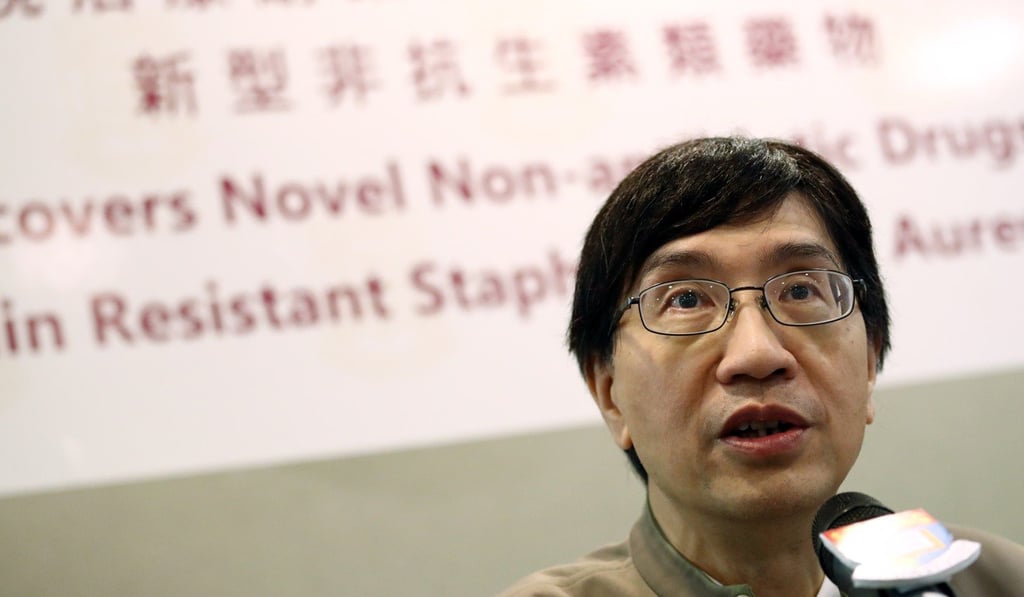
The breakthrough came when the researchers enlisted a different approach from the conventional method of using antibiotics to kill bacteria, which has led to the growth of superbugs.
“If we don’t have to kill the bacteria but still inhibit its growth, we could solve the problem of antimicrobial resistance,” Yuen, who first proposed the idea in 2009, explained.
Hong Kong doctors asked to report antibiotics use amid global superbug crisis
MRSA is one of the world’s most threatening superbugs. Yuen said around 45 per cent of all Staphylococcus aureus cases in Hong Kong were methicillin-resistant, or MRSA cases – four times higher than the percentage in Britain.