Why Hong Kong’s ban on ivory trade is such a big deal
The decision taken by the Legislative Council on Wednesday is seen by green groups as the ‘breakthrough moment’ in the battle to save elephants from extinction

On Wednesday, Hong Kong’s Legislative Council voted – by 49 to four – to phase out the city’s domestic ivory trade, hammering one of the last nails in the coffin of a historic but controversial industry.
First proposed by then chief executive Leung Chun-ying in 2016, the three-stage phase-out will culminate in all commercial sales of elephant tusks being outlawed by 2021. The maximum penalty for the smuggling and illegal trading of endangered species was also increased to 10 years’ imprisonment from two years.
Hong Kong approves elephant ivory ban in landslide vote
The move was welcomed by local and international conservationists, given the city’s reputation as a transit and smuggling hub for illegal wildlife products, but blasted by traders and craftsmen who saw it as a clampdown on a legal, tightly regulated industry steeped in traditional Chinese culture.
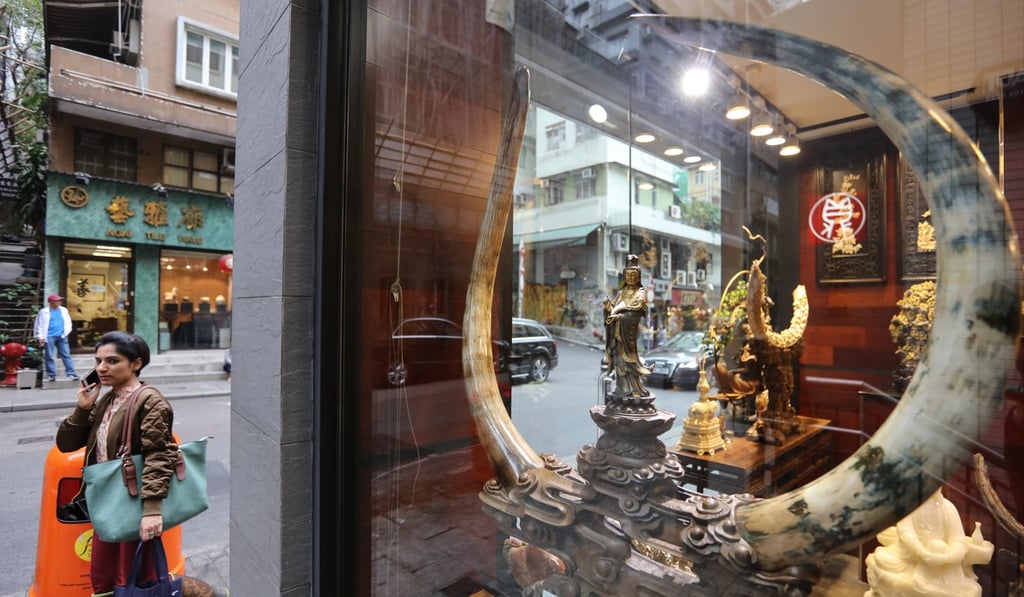
All licences to trade legal ivory stocks issued, extended, renewed or varied before the end of 2016 will expire by default by December 30, 2021. The government rejected calls from the trade – with the support of a small contingent of sympathetic lawmakers – to compensate merchants for their unsold stocks, arguing that it would send the wrong message.
The local ivory trade: a brief history
Owing to its geography and position as a free port, Hong Kong has been a trading hub for legal and illegal elephant ivory for the better part of a century. Fuelled by demand for intricately carved pieces from the West and later Japan, the then British colony’s retail ivory industry thrived in the mid-20th century.