Hong Kong’s Education University wages war on BPAs, other hormone-disrupting chemicals as it joins China’s State Key Laboratories network
Researchers expect to advance their work to eradicate harmful chemicals from oceans after EdU enters state laboratory consortium that allows universities to share resources

A research outfit at Hong Kong’s Education University is declaring war on what could be the next big global environmental and public health concern: chemicals that can wreak havoc with the hormones of animals and humans.
The unit, to be admitted to a national-level scientific research platform on Friday, will develop technologies to detect and remove endocrine-disrupting chemicals (EDCs) from the oceans. EDCs can cause genetic mutations in animals that may be passed on through generations even without direct exposure, according to Professor Rudolf Wu Shiu-sun, research chair of biological sciences.
Hong Kong mulls food safety law after scare caused by toxic chemicals in hairy crabs
“EDCs are widespread,” Wu said. “Even small amounts can lead to a disruption of endocrine systems in animals and some humans, altering hormones and causing reproductive impairments, development malformations and affecting growth.”
Examples of EDCs include bisphenol A (BPA), an organic solvent found in plastic bottles and epoxy resins; estradiol and ethinylestradiol (E2 and EE2), which are used in birth control pills; nonylphenols, used in detergents, cleaners, emulsifier and lubricants; and PBDE and TDCPP, which are flame retardants.
The EDCs get into rivers, lakes and the sea via sewage, are consumed by the animals that live there and reintroduced into the food chain, ultimately ending up in humans.
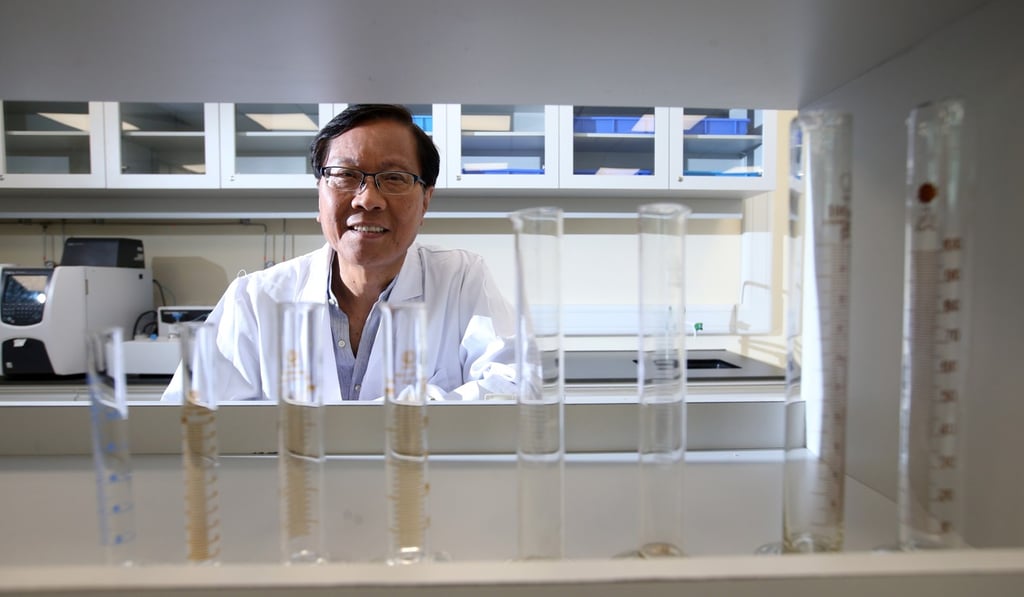
Wu’s interdisciplinary research team is currently working to further quantify such chemicals in the local population and environment, assess the related environmental and public health risks and socio-economic implications.