Hong Kong Baptist University researchers invent faster, cheaper and more accurate way to identify antibiotic-resistant bacteria in patients
- Team says method is 10 to 20 times faster than current antimicrobial susceptibility tests, with costs about 50 per cent lower

Researchers at a Hong Kong university have invented a faster, cheaper and more accurate way to identify how resistant bacteria are to antibiotics in individual patients.
The team from Baptist University said its invention was 10 to 20 times faster than the current antimicrobial susceptibility testing methods, with a cost estimated to be about 50 per cent lower.
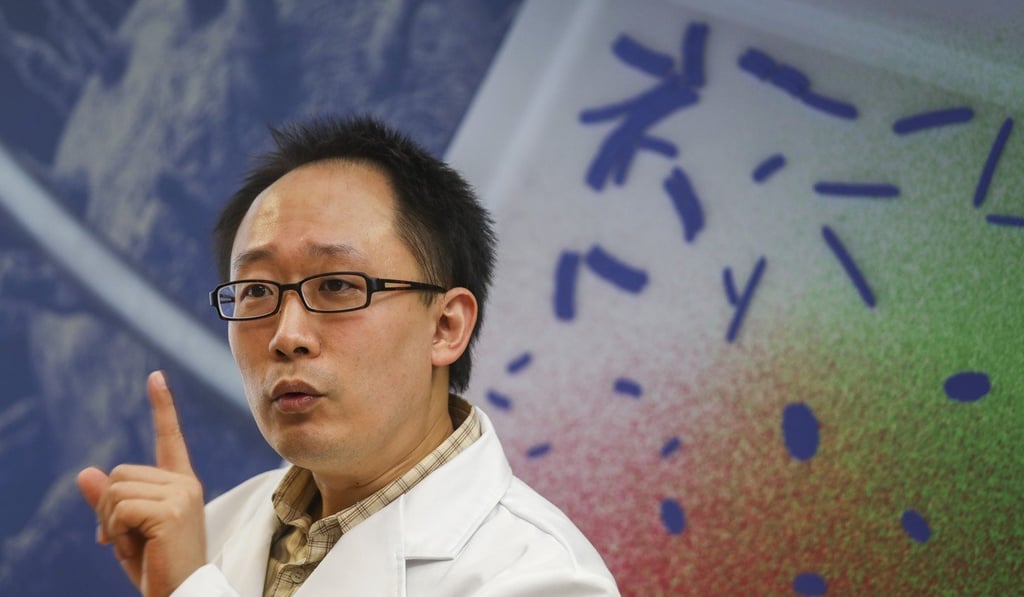
“Our invention could greatly reduce the problem of abuse or misuse [of antibiotics], and you could have a better estimation on the efficacy of the drugs,” said Dr Ren Kangning, an assistant professor at the university’s department of chemistry, who led the research team.
Antibiotic resistance, a problem described by the World Health Organisation as one of the biggest threats to global health, was accelerated partly due to misuse of the medication. The Organisation for Economic Cooperation and Development estimated that about 700,000 deaths were caused by drugs resistance globally every year.
The new method uses hydrogel, a material found in various products including facial masks and contact lenses. For the test, the hydrogel was made into a chip-like tool, which was also fitted internally with microchannels.