Judiciary in the dock: jailing of student activists opens door to debate
Controversy over the jailing of three student activists has sparked debate over whether the courts have been politicised

On the night of September 26, 2014, amid the glare of television cameras and floodlights, student leader Joshua Wong Chi-fung leapt onto a fence around government headquarters in Admiralty.
As he curled his spindly legs around the metal bars, the sight of the bespectacled teenager with his floppy mop of hair valiantly trying to scale the three-metre-high barrier, along with fellow student leader Alex Chow Yong-kang, galvanised others into action.
Another youth leader, Nathan Law Kwun-chung, then on stage at the demonstration, called on the others to join in the storming of the forecourt that they had dubbed “Civic Square”. They wanted to “reclaim” the space that had been the site of previous protests, they declared.
Law scholar urges Hong Kong justice minister to come clean on process that led to jail time for pro-democracy activists
Security moved in and clashes ensued. The scrum was a prelude to the 79-day Occupy protests that began two days later.
Their actions that night might have been consigned to a footnote of history were it not for a twist in a recent court judgment. The court’s decision has stirred emotions, fuelled a fiery debate and stoked the prospect of more protests after last Sunday’s turnout.
At the heart of the controversy is whether the city – with its proud tradition of independent judges – now has to reckon with politics creeping into its courts.
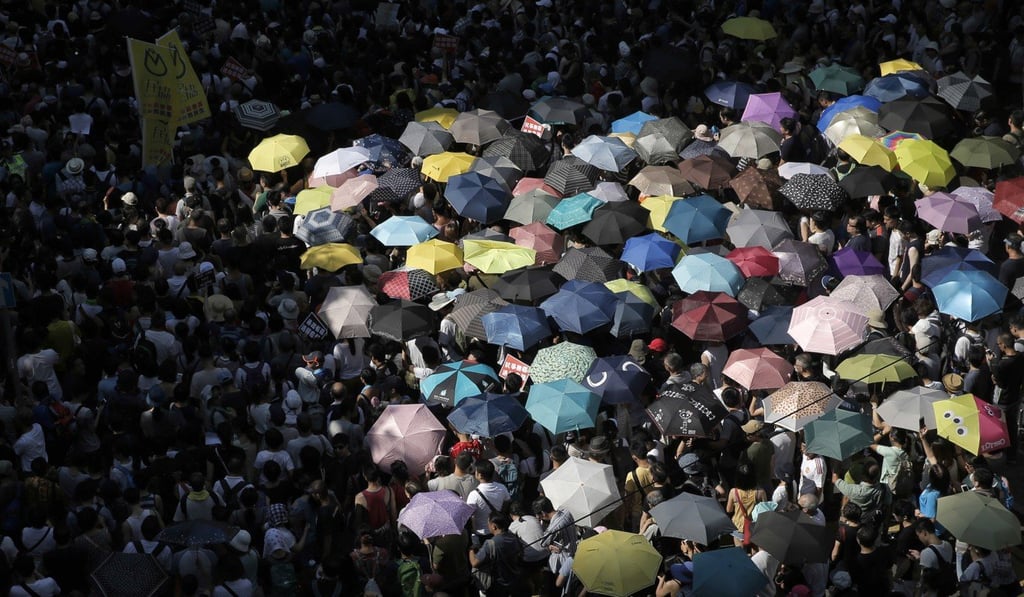
Last week, student activists Wong, then 17, Law, then 21, and Chow, then 24, were slapped with jail sentences of six, seven and eight months respectively by an appeal court, after being spared prison by a lower court last year, for their acts that fateful evening.