Beijing scholar says Hong Kong judges’ ‘different understanding’ of Basic Law is behind ‘great disparity’ in court cases
But city’s top lawyers counter remarks by legal head of central government liaison office reflect ‘unfamiliarity’ with local system

A Beijing legal heavyweight has rekindled controversy by suggesting Hong Kong judges have a “different understanding” among themselves of the city’s mini-constitution that at times produced “great disparity” in their adjudicated cases.
Speaking at a seminar in the city on Saturday, Wang Zhenmin, the legal head of Beijing’s liaison office in Hong Kong as well as a mainland law scholar, defended the national legislature’s interpretations of the Basic Law. In response, the city’s top lawyers said his comments reflected an “unfamiliarity” with the local legal system and required greater faith in it.
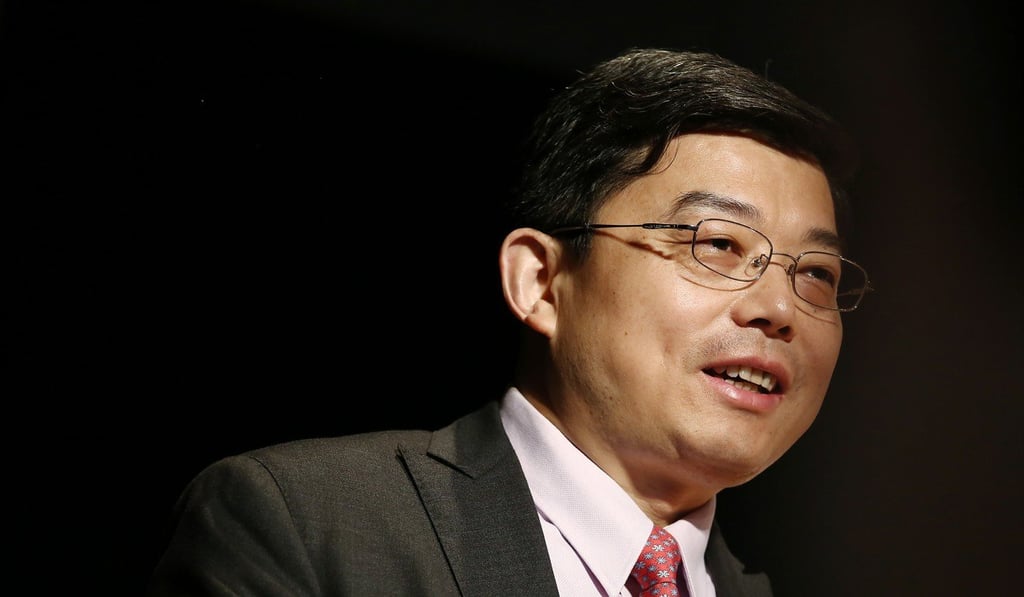
Defending the NPCSC’s past interpretations and comparing those of the city’s judges, Wang said: “In terms of quantity, frequency, depth and scope, the Hong Kong courts’ interpretations of Basic Law clauses far exceed those of the NPCSC’s.”
Qiao Xiaoyang’s mission to ‘promote and popularise’ Chinese constitution in Hong Kong
“As all courts and judges are entitled to interpret the Basic Law [when hearing cases], different judges and courts have different understandings, resulting sometimes in great disparity when trying cases,” he added, without stating specific examples.