National Geographic uncovers hellish scene in Peru where 140 children and 200 llamas were slaughtered at once
The mass killing that took place 550 years ago is believed to be the biggest known sacrifice of children

Archaeologists in Peru have found evidence of the biggest-ever sacrifice of children, uncovering the remains of more than 140 youngsters who were slain alongside 200 llamas as part of a ritual offering some 550 years ago, National Geographic announced on Thursday.
The site was located on top of a cliff facing the Pacific Ocean in La Libertad, a northern region where the Chimu civilisation arose, an ancient pre-Columbian people who worshipped the moon.
The cliff is located just outside the northwestern coastal city of Trujillo, Peru’s third largest city which today has 800,000 inhabitants.
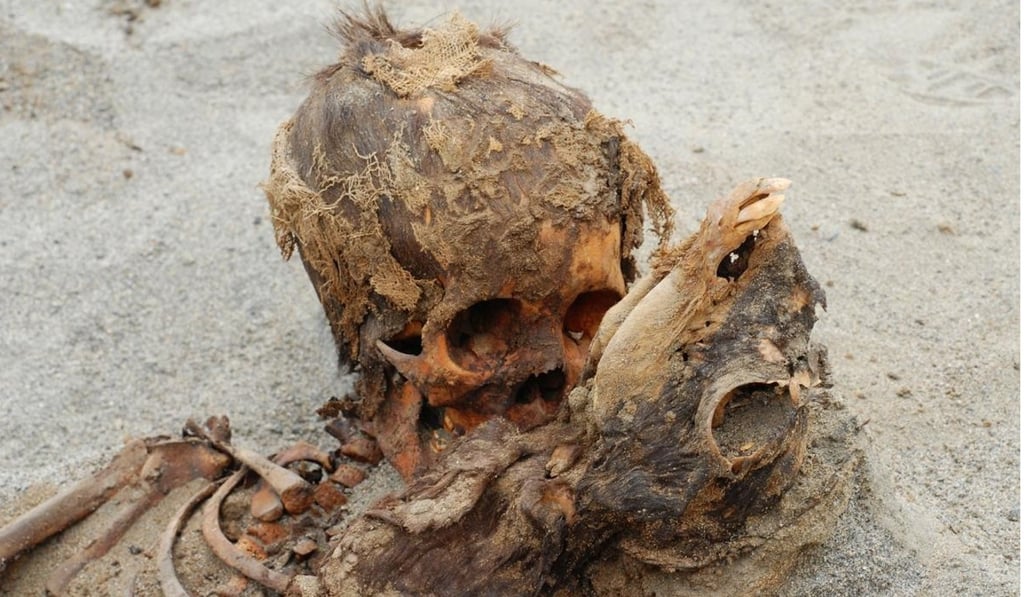
Cuts to the sternum as well as rib dislocations … suggest that the victims’ chests were cut open and pulled apart, perhaps to facilitate the removal of the heart
The investigations were carried out by an international team led by National Geographic’s Peruvian explorer Gabriel Prieto, of the National University of Trujillo, and John Verano, a physical anthropologist from Tulane University in New Orleans.