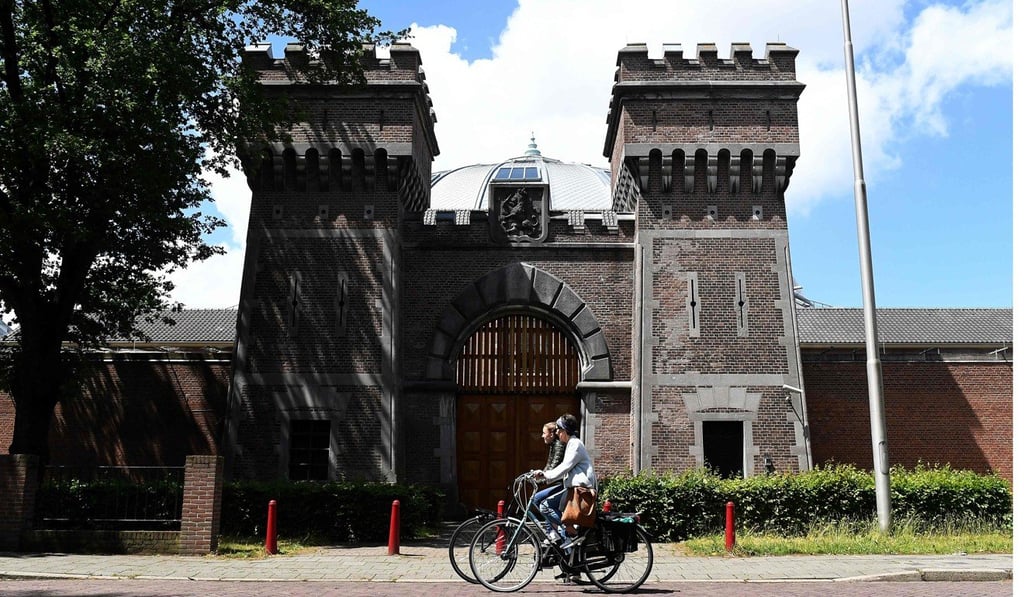
Empty Dutch jails become offices, restaurants, homes and entertainment venues for ‘prison escape’ games
Falling crime rates over the last decade, as well as changing ideas about punishing criminals have robbed prisons of their original purpose

Voices echo around the magnificent, luminous dome of Breda prison, breaking the silence of the 130-year-old building, now empty of inmates like dozens of others in The Netherlands.
Falling crime rates over the last decade, as well as changing ideas about punishing criminals have robbed this penitentiary of its original purpose, and its gates clanged shut in 2014.
Built in 1886, it was possible to watch everything happening in the prison from its central courtyard under the main dome – a classic example of the 18th century social theory of Panopticism on passive behaviour when people are constantly observed, first mooted by the English philosopher Jeremy Bentham and later built upon by his French counterpart Michel Foucault.
Metal spiral staircases snake all around the dome down to the former canteen under the glass floor. Old sports areas are marked out on concrete, all are surrounded by cells stacked four storeys high, their now-rusted doors swinging open.
Unlike the previous occupants, some 90 businesses hold the keys to the building, free to come and go at will.