Advertisement
Environment
WorldRussia & Central Asia

How a warm-weather plague wiped out 60 per cent of the world’s saiga antelopes in three weeks

Scientists say a period of unusually warm and humid weather turned a normally benign microbe into an unstoppable killer that left fields strewn with dead and dying antelopes. In less than a month, 200,000 perished

Reading Time:3 minutes
Why you can trust SCMP
A mass grave for saiga antelope that were found dead in Kazakhstan in 2015. Photo: Association for the Conservation of Biodiversity, Kazakhstan / Biosafety Institute, Gvardeskiy RK / Royal Veterinary College, London
The Washington Post

It took just three weeks to destroy 60 per cent of the world’s saiga population.
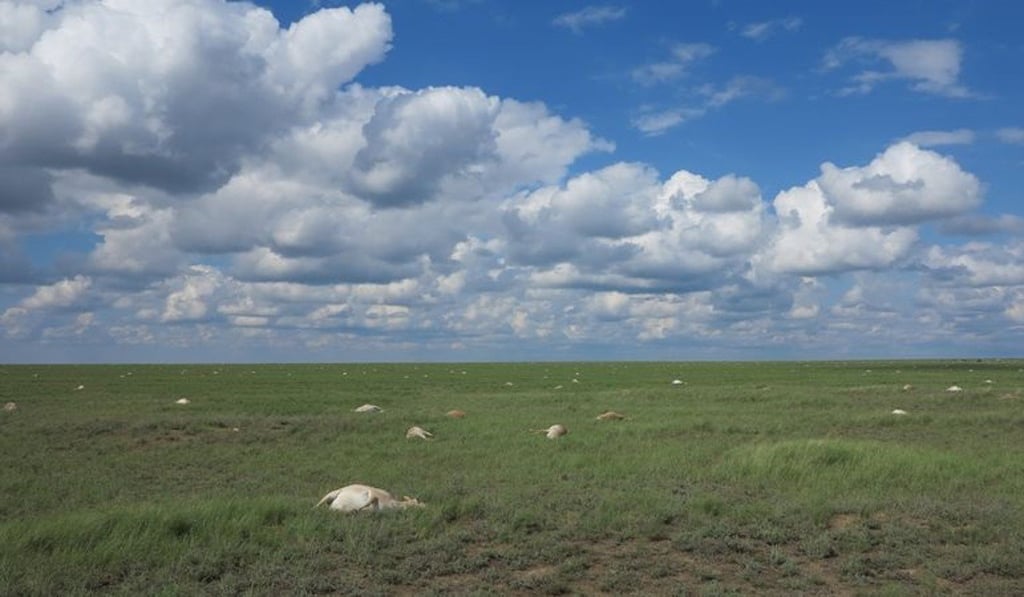
During an uncommonly warm and wet spell in May 2015, as the endangered antelopes gathered in central Kazakhstan to give birth to their young, a microbe in the animals’ absurdly large snouts turned virulent. The saigas’ immune systems were powerless against it. Once the disease struck a herd, every member died in a matter of days – first the adults, who suffered diarrhoea and respiratory distress, then the young, who starved or sickened themselves by drinking the milk of their dead mothers. Scientists who witnessed the die-off still have visions of carcass-littered grasslands seared in their minds.
Dead siaga antelope litter a plain in Kazakhstan in May 2015. Photo: Association for the Conservation of Biodiversity, Kazakhstan / Biosafety Institute, Gvardeskiy RK / Royal Veterinary College, London

“It was quite shocking,” said Richard Kock, a professor of wildlife health and emerging disease at the Royal Veterinary College in London. Kock has studied mass mortality events for more than 30 years, but what happened to the saiga was unprecedented, he said. It was also mystifying: Pasteurella multicoda, the bacterium responsible for the die-off, normally dwells unnoticed in saigas’ respiratory tract. What could have triggered the microbe to become suddenly, simultaneously deadly in 200,000 animals scattered across 170,000 sq km of habitat?
Advertisement
In a study published Wednesday in the journal Science Advances, Kock and his colleagues identify weather as the culprit. The 2015 mass mortality event, like two previous incidents in the 1980s, coincided with unusually high temperatures and humidity during the spring calving season, they report.
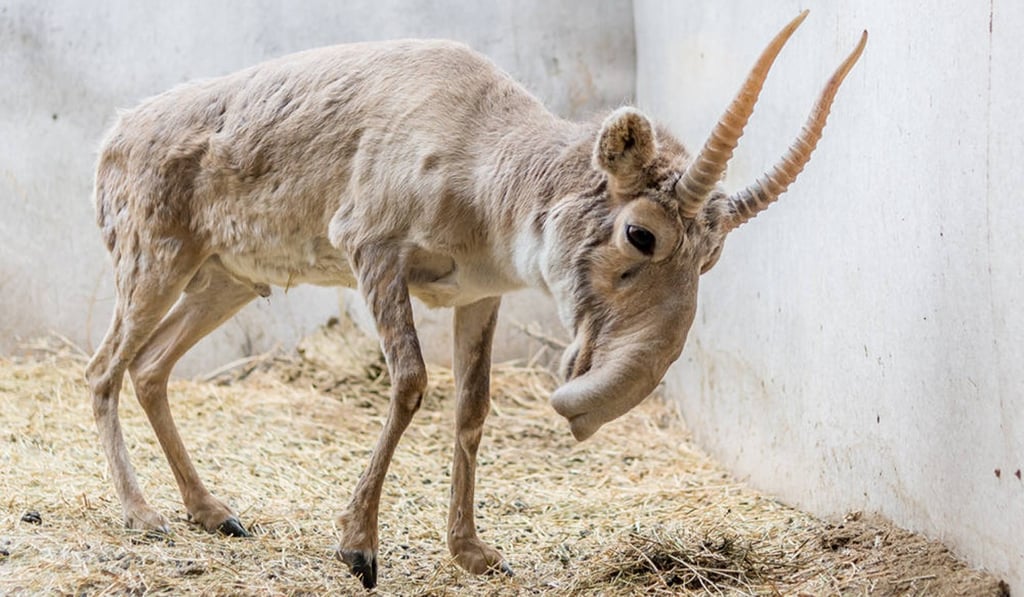
The bizarre-looking saiga antelope is notable for its bulbous, trunk-like snout. Photo: Shutterstock

“The animals were in a sort of foggy soup, and it looks like that bacteria naturally occupying the tonsils were woken up by this environmental factor,” Kock said.

Advertisement

Tracing the saigas’ killer was no easy task. Their habitat is so remote, and the disease so swift, it was impossible to capture a healthy member of an infected herd for comparison. Instead, the researchers from Europe and Kazakhstan tracked the ailing animals up to 1.5km a day, performing examinations of diseased and deceased individuals where they fell. The only known survivors were in small herds far from the main group, difficult to pin down amid the vast landscape.

Advertisement
Select Voice
Choose your listening speed
Get through articles 2x faster
1.25x
250 WPM
Slow
Average
Fast
1.25x