On the road to war with Russia, traffic may be biggest US enemy
Basic logistical challenges such as narrow roads, flimsy bridges and a tangle of bureaucracy mean Nato troops and weaponry could be too slow to move should Russia launch a lightning seizure of Nato territory in the Baltics

US commanders are worried that if they had to head off a conflict with Russia, the most powerful military in the world could get stuck in a traffic jam.
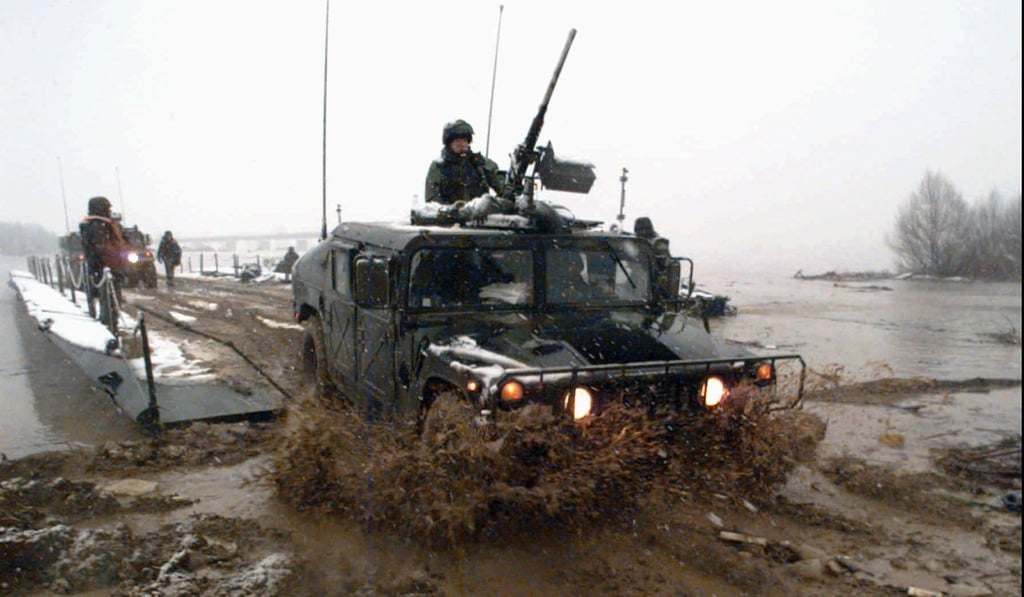
Humvees could snarl behind plodding semis on narrow roads as they made their way east across Europe. US tanks could crush rusting bridges too weak to hold their weight. Troops could be held up by officious passport-checkers and stubborn railway companies.
Although many barriers would drop away if there were a declaration of war, the hazy period before a military engagement would present a major problem. Nato has just a skeleton force deployed to its member countries that share a border with Russia. Backup forces would need to traverse hundreds of miles. And the delays – a mixture of bureaucracy, bad planning and decaying infrastructure – could enable Russia to seize Nato territory in the Baltics while US Army planners were still filling out the 17 forms needed to cross Germany and into Poland.
That possibility is tangible for troops who have got stuck trying to move between training exercises in Europe – like the US Army squadron that budgeted two weeks last year to get their Stryker armoured vehicles back by train to Germany from the Black Sea nation of Georgia. It took four months, leaving the troops sitting in Germany without their rides or weaponry, said Lieutenant Colonel Adam Lackey, the commander of the squadron.
If you can get there in 45 days, you’re just late to the fight
“We have to be able to move as fast or faster than Russia in order to be an effective deterrent,” said Ben Hodges, the US Army’s former top general in Europe.