Video | Tesla in orbit: bizarre twist as Falcon Heavy, world’s most powerful rocket, thunders into space
The mock payload of a red Tesla roadster, complete with fake astronaut driver, is on its way to orbiting the Sun after the successful test launch of SpaceX’s massive 23-storey rocket

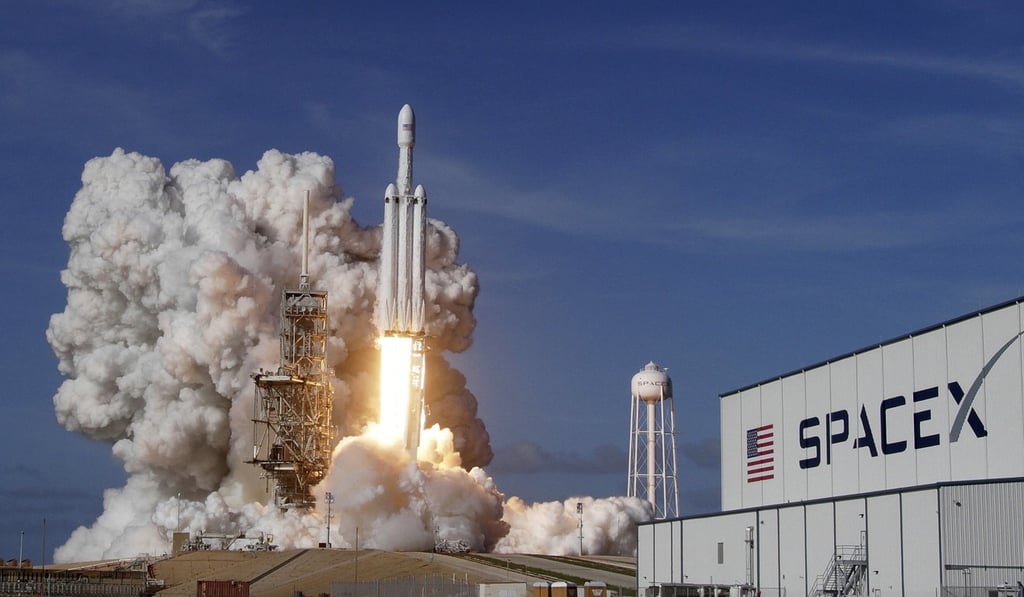
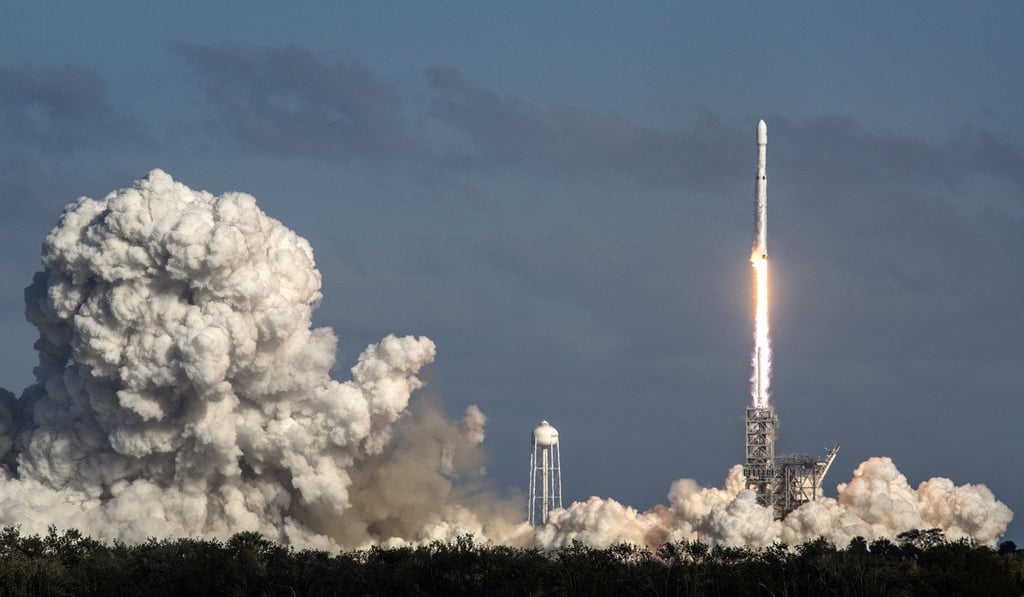
The world’s most powerful rocket, SpaceX’s Falcon Heavy, roared into space through clear blue skies in its debut test flight on Tuesday from a Florida launch site where moon missions once began, in another milestone for billionaire entrepreneur Elon Musk’s private rocket company.
The 23-storey-tall jumbo rocket, carrying a cherry red Tesla Roadster automobile into space as a mock payload, thundered off its launch pad in billowing clouds of steam and rocket exhaust at 3.45pm at the Kennedy Space Centre in Cape Canaveral.
Boisterous cheering could be heard from SpaceX workers at the company’s headquarters in Hawthorne, California, where a live-stream feed of the event originated. Several hundred spectators packed a campground near Cocoa Beach, 8km from the space centre, to watch the blast-off.
Musk previously said one of the most critical points of the flight would come as two side boosters separated from the central rocket within three minutes of launch. That occurred seemingly without a hitch.
Then, capitalising on cost-cutting reusable rocket technology pioneered by SpaceX, the two side boosters flew themselves back to Earth for safe simultaneous touchdowns on twin landing pads at Cape Canaveral Air Force Station about eight minutes after launch. The centre booster was expected for a return landing on a drone ship floating at sea, but its fate was not immediately known.
Musk told reporters on the eve of the rocket’s test flight that he would “consider it a win if it just clears the (launch) pad.”