Baidu offers facial recognition technology to help Beijing airport streamline boarding, traffic

Baidu, the dominant Chinese internet search operator that’s trying to recast itself as a leader in artificial intelligence, will provide its technology to streamline the operations and improve efficiency at Beijing’s main airfield.
The company will provide the airport with its AI-enabled facial recognition technology for the admission of ground crew and staff, gradually expanding the capability to verify the identities of passengers. Eventually, passengers will be able to board their flights just by having their faces scanned at the airport, with the “face as boarding pass” capability ready for implementation as early as 2018, Baidu said.
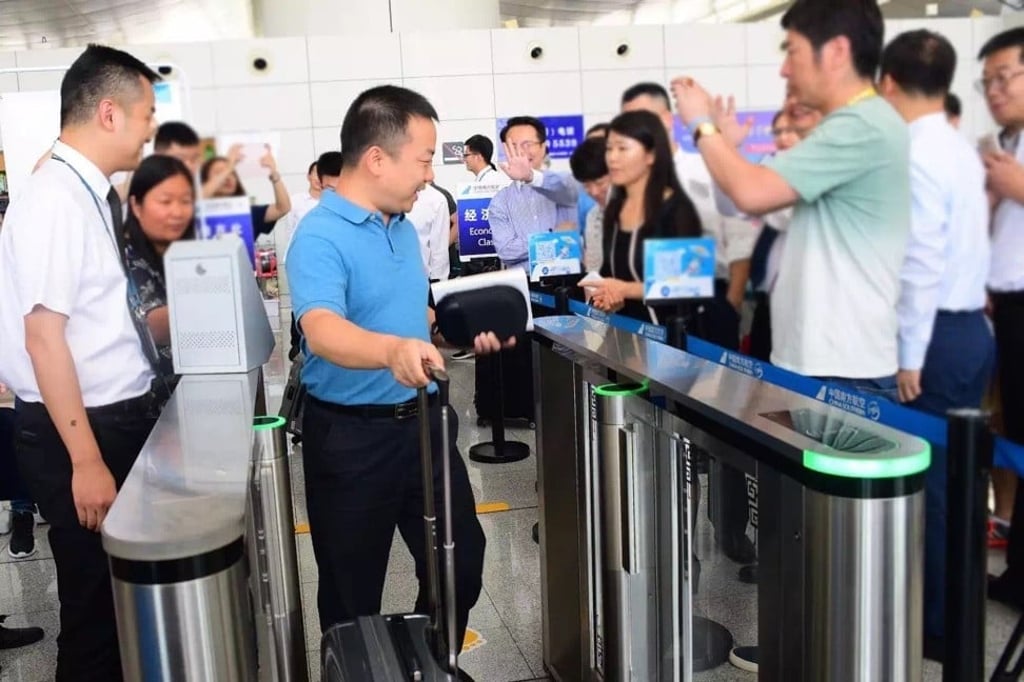
To be sure, Beijing airport isn’t the first test of Baidu’s technology. A similar application is at work at the Jiangying airport at the Henan provincial city of Nanyang, allowing passengers to verify their identities through facial scans against documented images before boarding their flights.
Airports around the world are embracing facial recognition to speed up their security and screening process, as they seek to free up workers for other tasks amid increasing demand for air travel.
Delta Airlines launched a programme in June at Minneapolis-St Paul, where passengers can check their bags automatically through kiosks that use facial recognition software to identify ticketed passengers. British Airways was reported in March to have introduced facial recognition-based border control that can seamlessly and quickly identify passengers at boarding gates at Heathrow airport.