ExclusiveChinese facial recognition start-up eyes global opportunities beyond public security
Investment in Chinese artificial intelligence firms reached US$2.76 billion last year as Beijing looks to transform the nation into an AI innovation centre by 2030
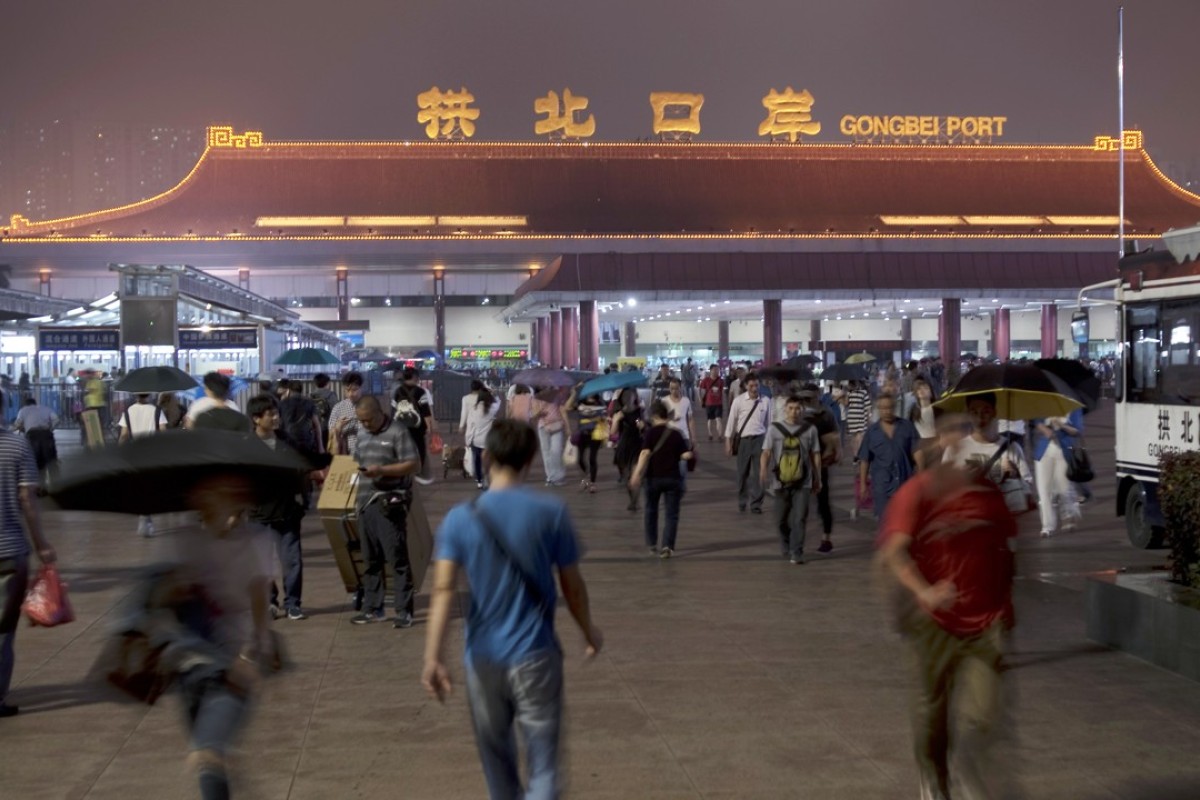
At the busy Chinese border point of Gongbei Port, fewer than a dozen customs officers have the mammoth task of picking out the smugglers and tax dodgers from the 400,000 travellers to and from Macau each day.
These officers are now aided by a powerful facial recognition system built by Shanghai-based start-up Yitu Technology, whose software is also used by banks to verify ATM transactions. Surveillance cameras at Gongbei Port capture the images of every traveller, matching and cross-referencing them with national databases. Those who cross over to Macau and back multiple times a day – a key attribute of smugglers – are flagged for closer attention.
Three seconds is all it takes to identify someone from the 1.4 billion faces stored in China’s national databases, and public security agencies have been the major source of demand for Yitu’s technology so far, according to Lin Chenxi, one of Yitu’s co-founders and responsible for product research and development.
That demand is driven by the need to secure key buildings, schools, hospitals and other public institutions, Lin said. The company has set its sights on exporting its technology overseas, to countries in Africa and Europe, where governments are grappling with the threat of terrorism, he said.
“Someday, AI technology will be just like the internet, existing everywhere in our daily lives,” Lin said in an interview in Shanghai this month. “There’s broader potential for the application of AI-based facial recognition beyond its current usage in public security, finance and medicine.’’