Sino FileChina’s economic growth target: at maximum, the political minimum
Policymakers are faced with few options – none good – when it comes to prioritising bulging short-term debt woes in the context of long-term prosperity goals

China’s annual economic target this year of “around 6.5 per cent or higher if possible” is the smallest since 1990, and points to a gradual adjustment of growth expectations and objectives by policymakers following a stubborn slowdown that has lasted seven years. It also underscores a consensus among leaders for the need to give more room to push through some painful reforms to deal with deep-rooted structural problems in the economy.
Since 2010, the Chinese economy has witnessed a steady slowdown, with annual growth rates of 10.5, 9.5, 7.9, 7.8, 7.3, 6.9 and last year’s 6.7 per cent, respectively. Averaged annual gross domestic product (GDP) growth rates between 1989 and 2009 were around 10 per cent.
In such circumstances, the government has lowered its target to a maximised but achievable level.
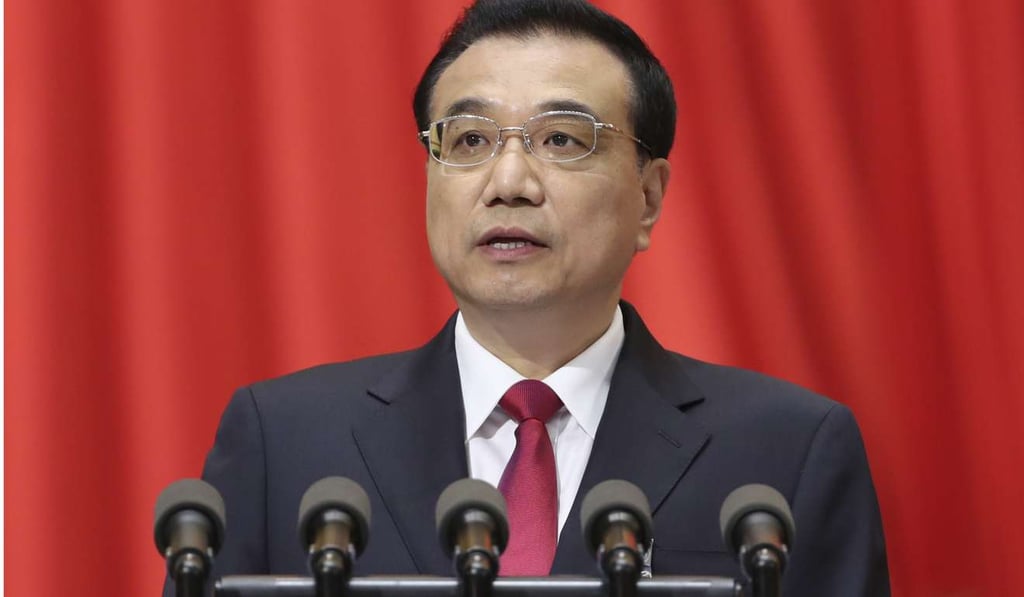
Since his maiden state-of-the-union address in 2013, Premier Li Keqiang (李克強) has lowered the growth rate, from 7.5 per cent in 2013 and 2014, to 7 per cent for 2015, to last year’s around 6.5 to 7 per cent.
The new number, 6.5 per cent, is a minimum target politically. It’s the lowest estimate possible that could still let Beijing realise its goal of doubling per capita income and GDP from 2010 levels by 2020, part of a programme that would allow the Middle Kingdom to measure its society as moderately prosperous.