What a stronger Modi means for China
After his recent success at the polls, India’s prime minister has a rare opportunity to overcome longstanding border disputes and build new economic bridges to Beijing

Dai Bingguo, former State Councillor and China’s special representative for border talks with India, said in an interview this month that a final settlement was within grasp. “After more than 30 years of negotiations, China and India are now standing in front of the gate towards a final settlement of their boundary question. Now, the Indian side holds the key to the gate,” Dai told a Beijing publication. That gate could well have just opened in Uttar Pradesh.
Prime Minister Narendra Modi’s Bharatiya Janata Party (BJP) swept to power in India’s most populous state with a thumping majority last week. With that, it is on course to form governments in four of the five states that went to polls recently.
Can India’s IT sector thrive in world of Uber and Trump?
This spectacular showing coupled with the uncertainty over US President Donald Trump in both the Indian and Chinese establishments could now pave the way for a thaw in relations between the two Asian giants.
Control over these states will help Modi secure majorities in both houses of parliament, making it easier for him to drive his agenda. The BJP enjoys a majority in the Lower House, where members are directly elected, but lags behind the opposition, Congress, in the Upper House, which is composed of members indirectly elected by state governments.
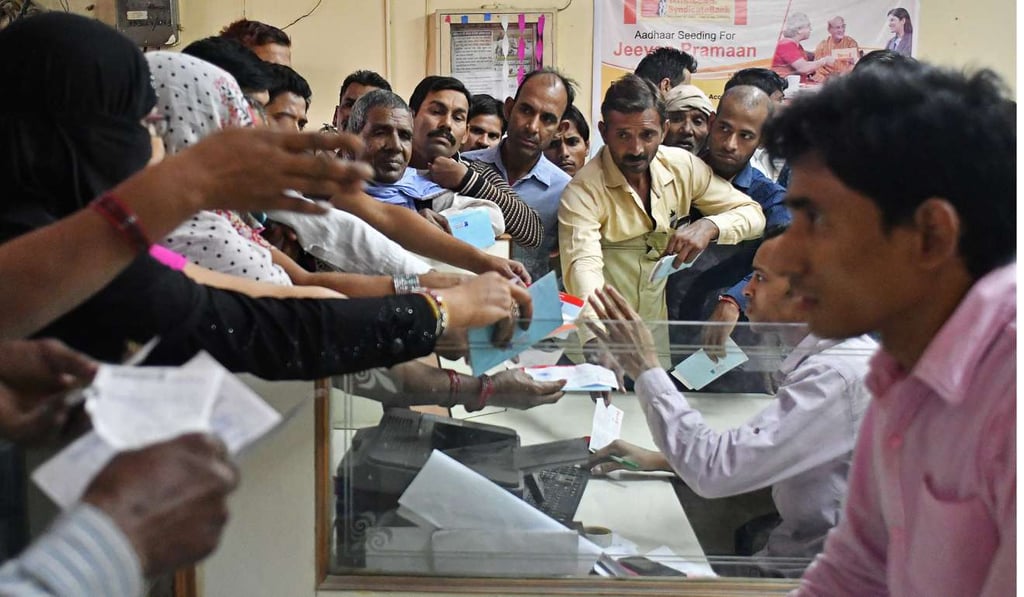
Seen as a mini-referendum on his currency policy, Modi has now emerged with an even stronger mandate that offers him a rare chance to mend fences with China with a bolder approach, say experts and policymakers.
“There is a chill in relations, and we can feel it,” said Subramaniam Swamy, one of the BJP’s top leaders. “There are sections within the West-oriented bureaucracy that do not genuinely want us to have good relations with China, and in recent times they may have taken the lead in shaping our China policy. This is an opportunity to seize back the initiative.”