How Mao and Khrushchev fought over China-India border dispute
‘I will tell you what a guest should not say: the events in Tibet are your fault’

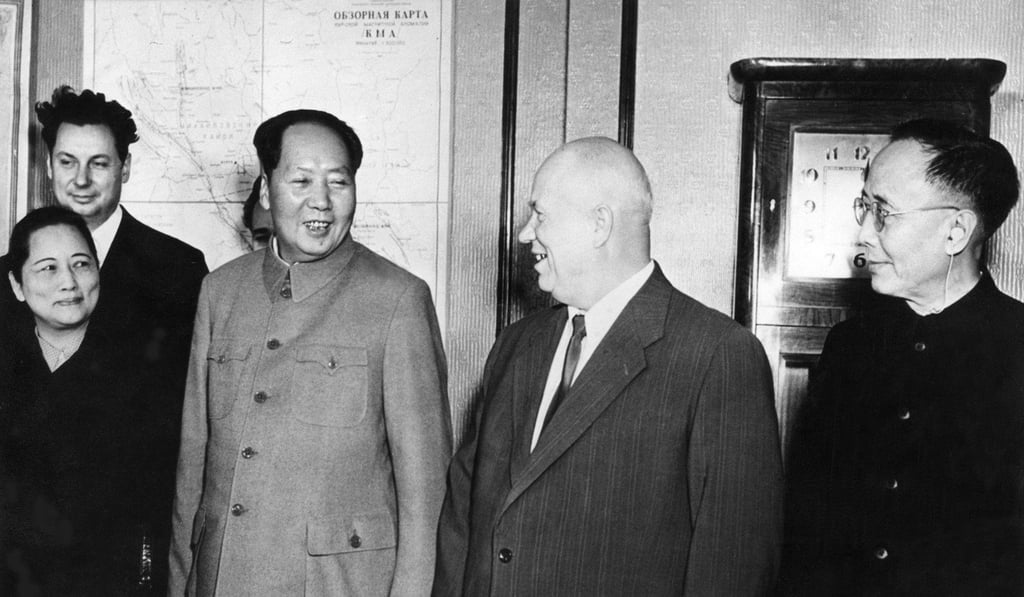
Soviet leader Nikita Khrushchev visited China at the end of September 1959 to hold a summit with the Chinese leadership. A little over a month earlier, several Indian guards had been killed by the Chinese military along their disputed border.
Khrushchev, who was about to visit the United States on a peace mission when the killings happened, released an announcement through the Russian news agency, TASS, calling on both sides to reach a negotiated settlement. The Chinese were greatly offended, seeing it as more evidence of the Soviets breaking ranks with their communist partners.
Road to Doklam: When will China and India start talking about the 1962 war honestly?
Khrushchev’s visit to China also came just months after the Dalai Lama had fled to India.
Following is a transcript of a meeting attended by Khrushchev, Mao Zedong (毛澤東), M.A. Suslov, A.A. Gromyko, Liu Shaoqi (劉少奇), Zhou Enlai (周恩來), Lin Biao (林彪), Peng Zhen (彭真), Chen Yi and Wan Xia Sang.
The testy exchanges, much of which centred on differences over India, foretold the Sino-Soviet rift that would ensue. They offer a rare glimpse of how the events leading up to the 1962 China-India war, usually seen as a localised border clash, had far wider implications than generally understood.