Goodbye Asia-Pacific. But why the sudden buzz over Indo-Pacific?
Beijing may hate it but the maritime part of ‘Belt and Road Initiative’ is basically Indo-Pacific with Chinese characteristics

One of the legacies of 2017 is nothing less than a new map of Asia, in which the Pacific and Indian oceans form a single geopolitical space. The Indo-Pacific is an idea whose time has come.
It is a concept with real-world implications for everything from military competition to economic infrastructure to the diplomatic arrangements that may or may not keep the peace. It is not simply a novel alternative to the Asia-Pacific geopolitical label to which we have all grown accustomed. The term “Indo-Pacific” gained new prominence recently with its repeated use by US President Donald Trump and other senior figures in his administration. America’s new National Security Strategy, released last week, confirmed this is now the preferred US way of understanding the world’s most dynamic region.
Critics claim the Indo-Pacific term is some American plot, an ideological artifice aimed at exaggerating India’s importance and somehow excluding China from a rightful place in the region. This ignores the reality that it is, in fact, China’s economic and strategic rise, more than anything else, that is defining the super-region we are coming to know as the Indo-Pacific.
US, Japan, India, Australia … is Quad the first step to an Asian Nato?
Beijing may not call it that, but the maritime part of China’s global trade “Belt and Road Initiative” – the Maritime Silk Road – is basically the Indo-Pacific with Chinese characteristics. In other words, China already has an Indo-Pacific strategy of distant economic, diplomatic and security engagement, perhaps more so than any other country, even if it calls it something else. Think of China’s presence and stakes in the key Indian Ocean ports of Gwadar, Pakistan, Hambantota, Sri Lanka, and Djibouti, for instance.
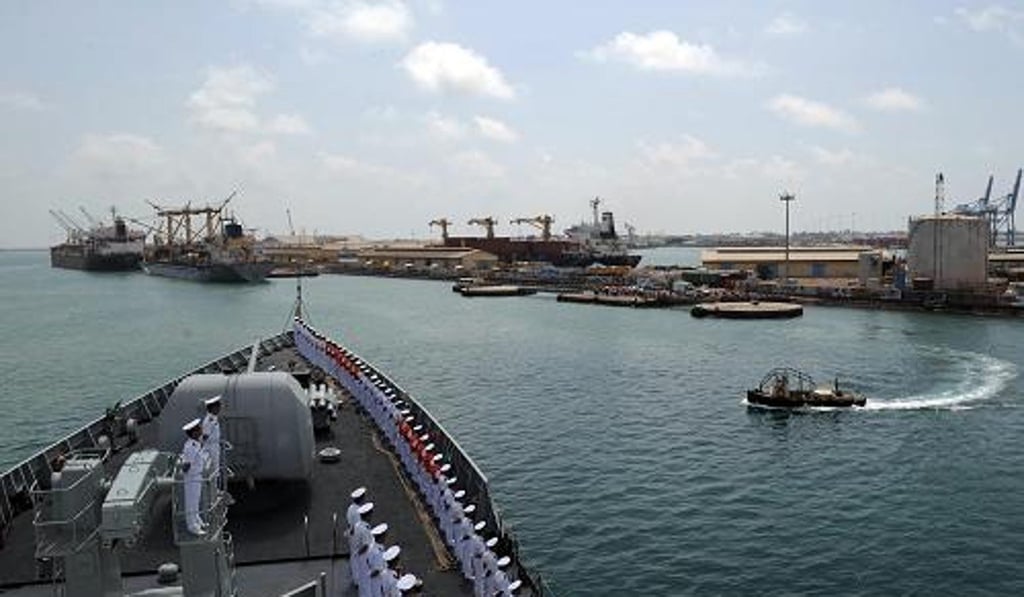
The Indo-Pacific framework also helps explain closer cooperation among diverse maritime partners such as India, Japan, Australia and the United States – whether in various bilateral and trilateral arrangements, or the “quadrilateral” dialogue China opposes. But it simultaneously legitimises a role for China in the Indian Ocean.
There’s one clear winner when US, India, Japan and Co. gang up on China. It is …
The mental maps of regions that leaders and diplomats use have material effects. These maps help define where nations prioritise their diplomatic attentions, the power projection capabilities they develop for their militaries, the strategic problems they must attend to or can afford to ignore, the partners and rivals they identify, and the regional organisations they prefer – including the lists of who is in and who is out.