
Sino File | Who picks up the trillion-dollar tab for China’s Belt and Road?
Beijing’s grand infrastructure project will require US$5 trillion in the next five years alone. If it succeeds, everyone wins. If it fails, guess who loses...

China’s leaders never lack for ambition. Yet perhaps most ambitious of all is President Xi Jinping ( 習近平 ). His “Belt and Road Initiative” is arguably the biggest and most ambitious development plan the communist nation – and perhaps the world – has ever conceived. It exceeds even the Marshall Plan the United States used to rebuild Europe after the second world war.
In general terms, the initiative aims to facilitate and speed the economic growth of China’s less-developed western region, thus serving China’s interests as a whole.
But it is also a plan with global vision. It involves 65 countries across the three continents of Asia, Europe and Africa and covers 60 per cent of the global population and about one third of global economic output.
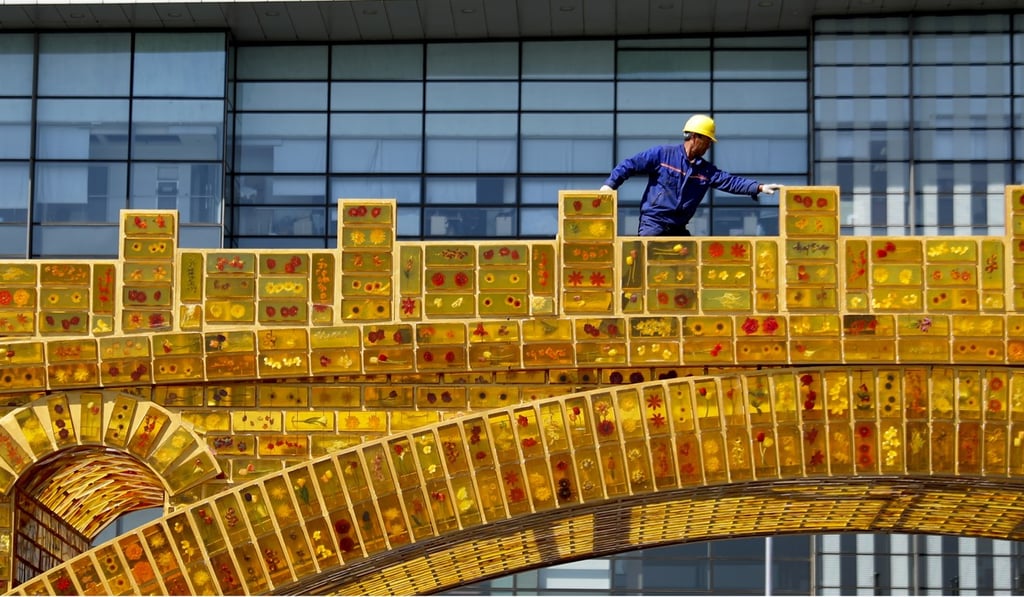
It comprises an infrastructure network of ports, bridges, canals, roads and rails, built and operated with Chinese participation, that will link the Middle Kingdom with the larger part of Eurasia and Northern Africa. The large-scale nature of the plan should help stimulate global economic growth amid a persistent slowdown. But the ultimate objective is political, as part of Xi’s “China dream” to revive his country’s status in history.
There is, of course, a great deficit in infrastructure and connectivity in the region the initiative is aimed at.