On ReflectionInconvenient truths: the murder of journalism in India
The killing of journalist Gauri Lankesh was frighteningly predictable – and a sign of a larger problem

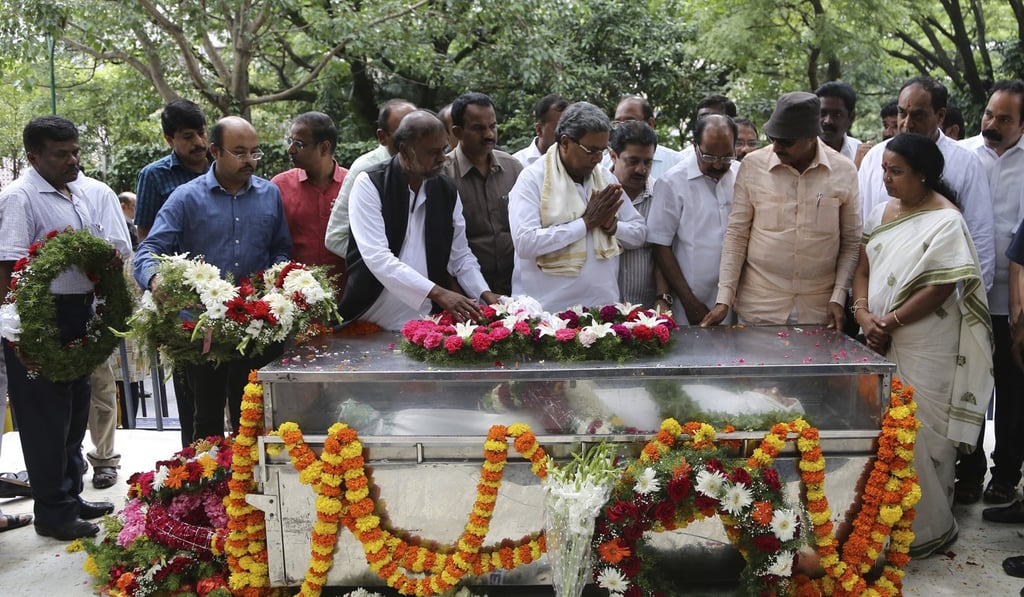
I was not familiar with the Kannada and English-language journalist Gauri Lankesh’s work, unfortunately. But when news broke late on the night of September 5 that she had been shot dead outside her home, it felt familiar. It felt part of a pattern that I had been tracking the past two years. What is that feeling when something you have been talking about turns out as predicted, but there is no joy in being proved right, only a heaviness in your stomach? I felt that.
Less than two weeks after Lankesh’s murder, on September 19, a television reporter called Shantanu Bhowmik was beaten to death in the state of Tripura while he covered a clash between the police and political outfit representing indigenous peoples. For the past two years, India has ranked among the countries with the highest number of journalist deaths. In 2016, the International Federation of Journalists listed India as the eighth most dangerous country for journalists, with five murders. In 2015, Reporters Sans Frontieres listed India as the sixth deadliest country with nine journalists killed.
THE TRUTH-VIGILANTES FIGHTING INDIA’S FAKE NEWS
In its 2016 Global Impunity Index, the Committee to Protect Journalists (CPJ) observed that India had not solved a single journalist’s murder over the past decade. Most of these journalists were independent reporters in small towns, and had been shot dead near their home, like Lankesh. The murder of Jagendra Singh in the summer of 2015 had been especially brutal – he had been set on fire, allegedly by the local police, at his home.
I had been keeping track of these murders, perhaps because I am an independent reporter myself. Earlier this year, I spent several months investigating the collapse of a bridge that killed 26 people in Kolkata. The state administration shut down channels of communication. It took weeks of waiting and some sheer luck to access some materials via the Right to Information Act. When the story was published, I felt relieved for the delay. I was leaving for Germany within a few days for a fellowship. I was wary of every phone call from an unknown number. Earlier this year, a journalist called Sandhya Ravishankar, also independent, had received threats for her superb investigation on illegal sand mining.
Not everyone shared my unease. One afternoon this summer, I had a revealing conversation with my cohort of Indian journalists in Germany. “But you didn’t receive any threatening phone calls!” a couple of colleagues said. “And India has such a large population that we are bound to be on the top 10 list of everything.” In other words, if we consider the ratio of deaths to the population, the picture is not alarming.