Advertisement
China economy
This Week in AsiaOpinion
Christopher Balding

Opinion | China’s economy isn’t opening. It’s closing – and it’s hurting itself

An advanced economy requires ideas, interaction, and competition – all things that Beijing is shutting down and turning away from

Reading Time:3 minutes
Why you can trust SCMP
US President Donald Trump with Chinese President Xi Jinping at a business event at the Great Hall of the People in Beijing. Photo: AP
President Xi Jinping’s speech to business leaders at the Boao Forum, in which he announced the further opening up of the Chinese economy, seems to have calmed markets’ fears of a potential trade war with the United States.

His speech at the forum, which is often referred to as “Asia’s Davos”, follows his widely lauded address to the World Economic Forum (the “real” Davos) in 2017, when Xi with the support of Chinese state media encouraged the world to see China as the new global defender of openness. But away from media events with global CEOs, the reality of Chinese openness appears radically different.

Despite the rhetoric, China remains a closed economy. A February IMF study on measures of trade and investment openness found that China was not only more closed than the average developed economy, but more closed than the average emerging market economy.

Trump versus China: is this the dawn of a second cold war?

These are realities foreigners deal with every day. Though agreeing to let Visa and Mastercard enter China as part of its World Trade Organisation membership, China has delayed doing so seemingly infinitely. After losing a WTO case to the Obama administration in 2012 and telling US President Donald Trump they would be allowed to operate in China, the world is still waiting for Beijing to approve their entry.
Advertisement
Beijing has agreed to let Visa and Mastercard into China – but has delayed doing so. Photo: AP
Even the so-called investment negatives list that tells foreigners where they can invest, while shrinking moderately last year, remains sizeable. If not required to have a majority Chinese partner, foreigners remain restricted or prohibited across a wide range of industries, most of which have no national security implications. For a country selling itself as the new leader of openness, there is no indication it is willing to let foreigners in. FDI flows have increased this decade by an average annual rate of just 3.1 per cent compared with 9.2 per cent the previous decade.

Just this week it was announced that all scientific data generated in China would need to be vetted by the government before it could be published. If Beijing is seeking to attract high-quality research and development investment while demanding to control scientific data generated in China, it may want to rethink its openness mantra.
Advertisement
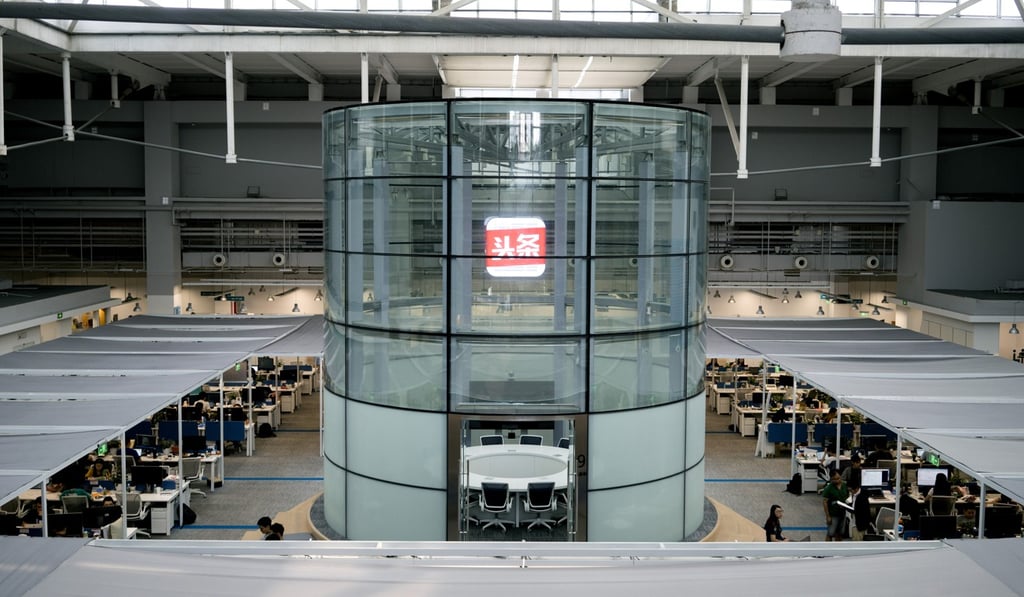
The logo for Beijing ByteDance’s Jinri Toutiao (Today’s Headlines) mobile app at the company's headquarters in Beijing. Photo: Bloomberg
Advertisement
Select Voice
Choose your listening speed
Get through articles 2x faster
1.25x
250 WPM
Slow
Average
Fast
1.25x