Could Sam Rainsy’s resignation help end Hun Sen’s reign in Cambodia?
The ruling Cambodian People’s Party may have forced its nemesis to resign, but attempts to sue the opposition out of existence will not solve its biggest headache – post-war baby boomers

Cambodia’s colourful opposition leader Sam Rainsy, in exile in France since 2015, stunned his loyal supporters by resigning this week amid a sharp deterioration in the country’s political climate with less than four months before all-important commune elections that will act as a bellwether for next year’s national polls.
The resignation was widely viewed as an attempt to outmanoeuvre legal efforts by Prime Minister Hun Sen to ban politicians with convictions from standing for public office – Rainsy has convictions for defamation against Hun Sen and the ruling Cambodian People’s Party (CPP) that are widely seen as politically motivated.
This leaves Kem Sokha at the opposition helm and potentially the country’s the next leader.
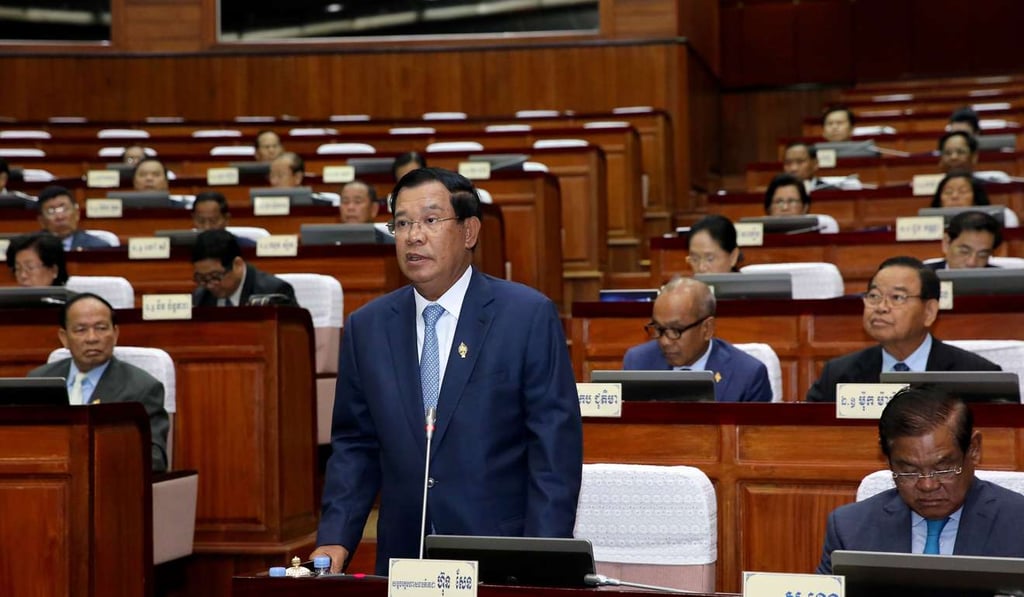
It’s a political fracas that will also be watched closely by Beijing, which backed Hun Sen in the 2013 election and has tipped billions of dollars into Cambodian infrastructure as part of its wider strategy to open trade routes along its southern flank.
Ren Chanrith, coordinator of political dialogue at the Youth Resource Development Programme, said the CPP was attempting to minimise opposition influence and this was weakening democracy and checks and balances. “The image of Cambodia in the international community has been damaged because they can see that the ruling party is only trying to fight for their own power and Cambodia is moving to dictatorship,” he said.