Teflon Thailand’s economy gets a boost as Chinese tourists return
As junta generals mark third year in power, agriculture and tourism fuel biggest quarterly growth rate in four years

Thailand’s 2014 military coup – its second putsch in a decade – led to predictions that autocratic junta rule would see Southeast Asia’s second-largest economy become the region’s new “sick man”, just as traditional laggards from Myanmar to the Philippines were stirring from long slumbers.
But as the ruling ex-generals mark their third year in power on Monday, the Thai economy is showing just why the moniker “Teflon Thailand” – referencing its resilience to constant political shocks – is more apt.
Official figures released last week showed the economy grew 3.3 per cent in the three months to March from a year ago, the highest quarterly growth rate in four years. The IMF said in March that the economy, which has lagged regional peers since the coup, “is expected to advance at a moderate pace in the near to medium term”. The latest figures, observers say, suggest the country will enter an expected election season in 2018 with an uptick in optimism about its economic future. The junta, led by Prime Minister Prayuth Chan-ocha, is expected to hold polls soon after the year-long mourning period for King Bhumibol Adulyadej ends in October.
Thailand backs down on Facebook ban threat after site ‘cooperates’ over royal posts
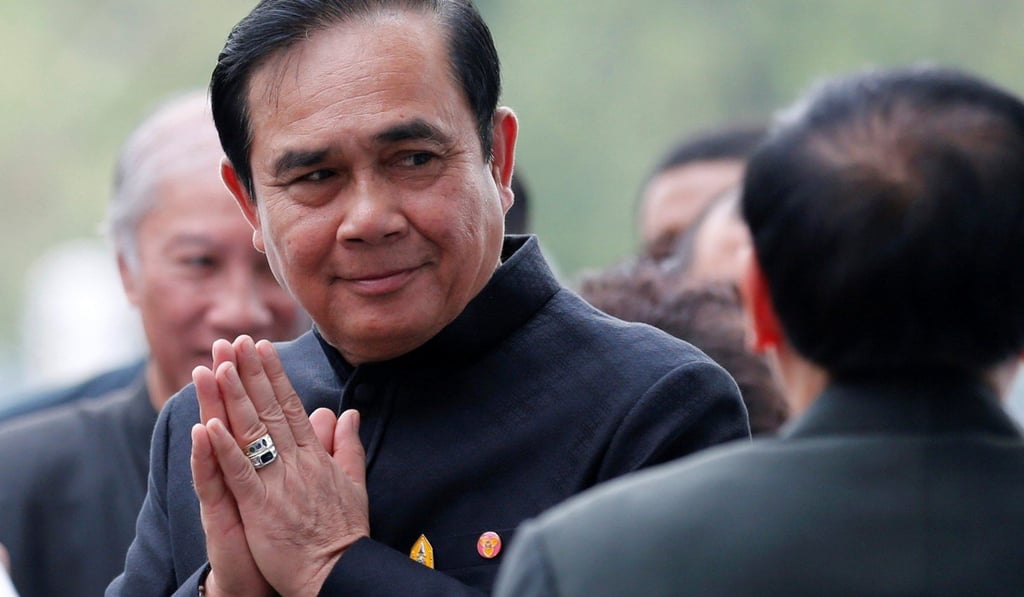
The former army chief took power in a bloodless coup on May 22, 2014, after months of protests against the civilian prime minister Yingluck Shinawatra. Yingluck is the sister of the former populist premier Thaksin Shinawatra, who was deposed in a coup in 2006. The military has staged 12 coups since the end of absolute monarchy in 1932.
“It is understandable that some are still not convinced about the outlook for the Thai economy, particularly the long-term outlook past next year’s general election,” said Tim Leelahaphan, a Bangkok-based economist with Maybank Kim Eng Securities. But “the medium-term outlook is not bad in our view,” he said. “Investment sentiment should be supported by the political calendar being much clearer as politics is a very important factor driving Thailand’s growth and markets.”
At least 40 wounded after car bomb hits Thailand’s troubled south
And Song Seng Wun, a Singapore-based regional economist at CIMB Bank, said the latest growth figures were an indication that the “Thai economy is stabilising as the generals overcome the initial difficulties they faced with macro planning and handling public spending.”