Trump lays time bomb for Vietnam’s mine-clearing efforts
A plan by the US administration to reduce aid to Hanoi could hit efforts to clear the unexploded ordnance that remains from the Vietnam war

When Chuck Searcy arrived in Vietnam in June 1967 as a US Army intelligence analyst, little might he have expected that nearly 30 years later he would return to live and work in the country he once swore was his enemy. But doubts about the war set in during his years of service – doubts that only grew after his return to home soil. Propelled by a niggling sense of guilt, Searcy returned in 1995 with a new job and a new mission – working to atone for his own country’s actions.
Searcy now works with several organisations in Vietnam, including Project Renew, one of a handful of groups dealing with the thousands of bombs and mines – known as unexploded ordnance or UXO – that still litter the Vietnamese countryside around the former Demilitarised Zone.
Vietnam’s tale of two metros, one built by the Japanese and the other by the Chinese
Decades since the war ended in 1975, Searcy’s new line of work remains in desperate demand. During the war, 14 million tonnes of ordnance was dropped on Vietnam – nearly three times the amount dropped by the Allies throughout the second world war. An estimated 10-30 per cent of it failed to detonate.
That has proved a lethal legacy – more than 100,000 civilians have been killed by buried bombs and mines since 1975. Even today, the Vietnamese government believes around 15 per cent of the country’s total surface area is contaminated by UXO, a rate that rises to 84 per cent in areas such as Quang Tri Province, located on what was the division between North and South.
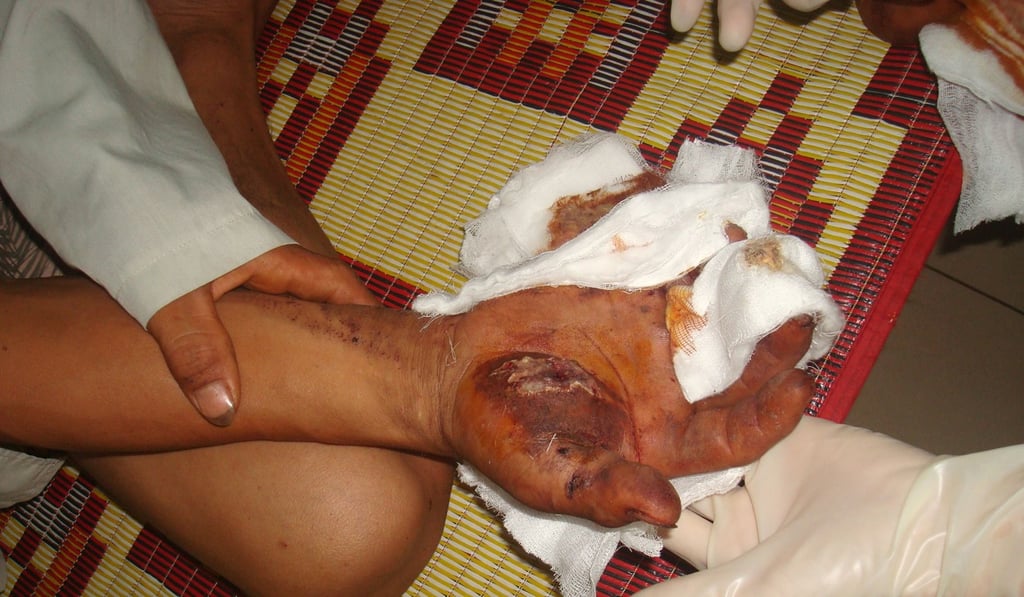
Yet despite such figures, Searcy’s efforts to help atone for the US military’s bloody campaign in Vietnam could be scrapped under the administration of US President Donald Trump. “At this time, the pressure is increasing for us at Project Renew and the US State Department to get the job done, soon,” Searcy said. “That’s because of funding uncertainties, with the Trump administration, and because us vets are getting older – plus attention continues to shift to active conflict areas – which never seem to end – such as Iraq, Afghanistan, Libya, Syria, and others.”