What Shinzo Abe’s election win will mean for China-Japan relations
If poll gamble works, tougher stances on self-defence, North Korea and the South China Sea are likely – but economic interdependence means there must be cooperation along with the competition

Japan’s ruling Liberal Democratic Party, together with its ally Komeito, is tipped to cruise to victory in today’s snap parliamentary election, with major implications for China – not all of them negative.
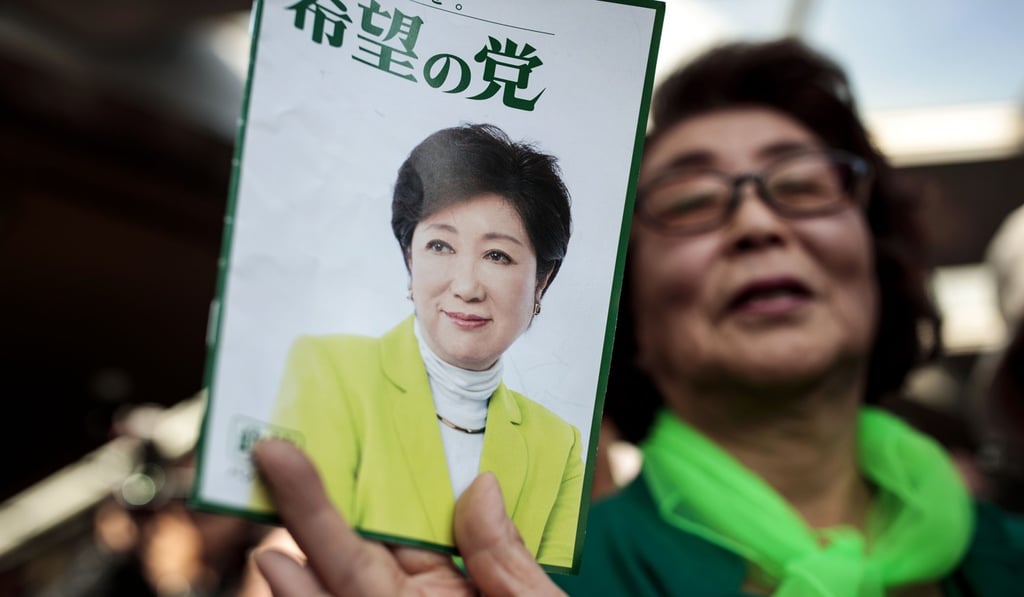
Prime Minister Shinzo Abe’s decision last month to dissolve the lower house and call the early vote is widely expected to pay dividends, with the realigned opposition camp left weakened after failing to create a formidable political force under Tokyo Governor Yuriko Koike’s Party of Hope.
Abe’s popularity has plunged in recent months following a series of political scandals, mismanagement of government agencies, poor selection of officials and a series of gaffes by top ministers – all of which should have ended his political career.
Polls show Japan PM Abe set for landslide win as support for Tokyo Governor Koike’s new party fades
But this election will most likely do the opposite, and pave the way for Abe to rise the top of the political pyramid as a supreme leader, mirroring Xi Jinping’s ascent in China.
A victory on Sunday puts Abe in the position to become the Japan’s longest serving prime minister. In fact, he may remain in office until 2021 if he is re-elected as the Liberal Democratic Party’s (LDP) president in autumn next year. The party even changed its rules earlier this year to allow one person to stay in office for three terms instead of two.
Abe’s consolidation of power will have far-reaching implications for China. To consolidate and strengthen his power base, Abe will push his agenda with renewed legitimacy. One of his top priorities is amending Japan’s pacifist constitution, which bars the country from waging war or maintaining a full-fledged military force.