Indonesia’s Reformasi activists were burned, beaten, electrocuted – and they still fear for their country
Twenty years after Indonesia’s Reformasi movement started, the activists who were persecuted under the dictator Suharto warn that the country could be backsliding into authoritarianism

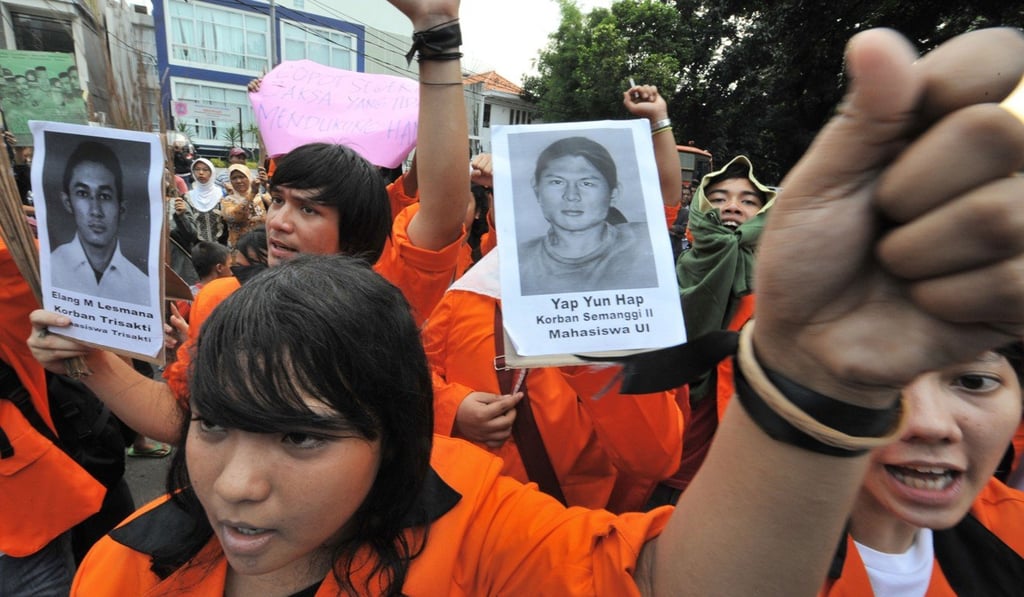
February 4, 1998, was a day that would change Desmond Junaidi Mahesa’s life forever and he never saw it coming. The social justice activist had left his office to attend a gathering after the Muslim festival of Eid in Jakarta, but he never made it to the celebration. Instead, he was approached by two men who grabbed him, threw a bag over his head and forced him into a car. About 40 minutes later, he found himself in a 2 x 2.5-metre room in an undisclosed location where he would be kept for the next two months.
Is Indonesia’s Reformasi a success, 20 years after Suharto?
His abductors grilled him about his activism, zeroing in on his support of then opposition leader Megawati Sukarnoputri, the daughter of Indonesia’s founding father Sukarno.
Twenty years have passed since that Wednesday, but Mahesa still vividly recalls the torture he endured under the authoritarian rule of the dictator Suharto.
To get Mahesa to speak, they beat him and gave him electric shocks.
“I was electrocuted by the kidnappers … I haven’t been able to grow hair ever since,” he told This Week in Asia at his office in parliament. “After I was released in April 1998, my friends told me not to go out in public because I was still being targeted by police.”
Mahesa shared that cell with other prominent Indonesian activists such as Pius Lustrilanang, Andi Arief, Haryanto Taslam, Raharja Waluya Jati, and Faisol Riza.