Prostitution to redemption: a Chinese farm girl’s journey
Life offering ‘extras’ as a masseuse gave single mother a way to support her child but also brought fear and shame. Following an AIDS scare she set up her own NGO and now works to help others in a similar position

Her life changed track in 1997 on a crowded train heading south from the far northeast, where she is from.
Yong Gan (not her real name) has a full body that caught the attention of a middle-aged woman who ran a massage parlour in Tianjin ( 天津 ), a coastal town near Beijing. After her family’s efforts to marry off the 20-year-old single mother to an older farmer failed, Yong Gan had decided to leave her four-month-old daughter in the care of her mother and try her luck in the south.
When her new friend heard that she was on her way to take up a job at a shoe manufacturer in the small town of Cangzhou (滄州), near Tianjin, she said a factory was hardly a place for a pretty young thing like her. Too much work, too little pay.
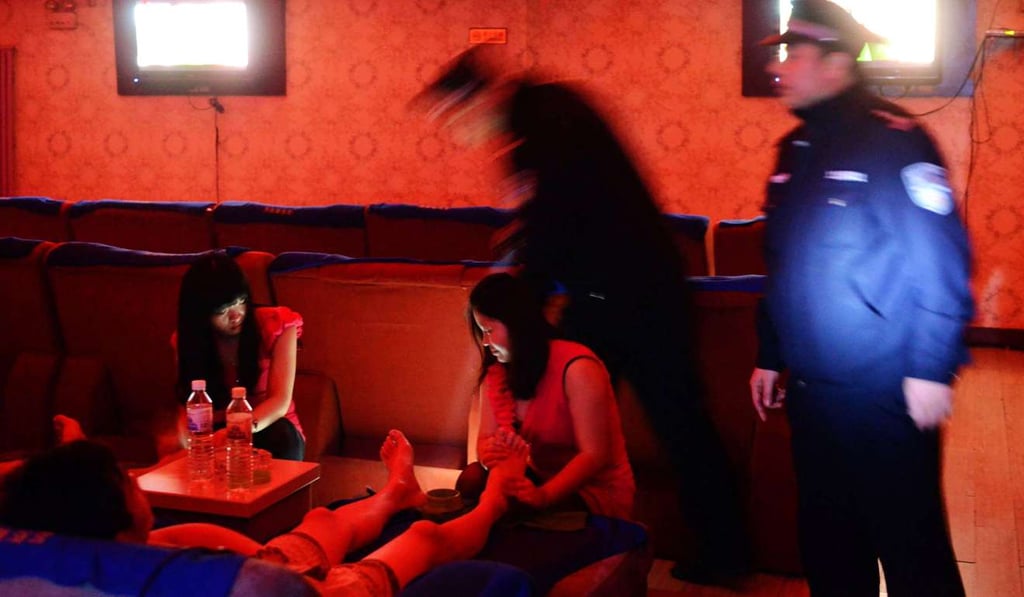
After a brief training period, she started working as a masseuse, usually for male clients. For a one-hour session, she would be paid 60 yuan (HK$68). Her colleagues, however, were making a lot more. Going slightly beyond her brief, so to say, would yield more than twice as much; offering full-fledged sexual services would earn 600 yuan – her monthly salary at the factory.
I was forced to sell my body in a Hong Kong bar
Prostitution is illegal in China but is rampant in venues such as massage parlours, nightclubs, hair salons and karaoke bars. Some researchers believe there may be more than 10 million prostitutes in the country. The government has brought in more than a dozen laws to check prostitution in the past couple of decades, in the course of which it has shifted its emphasis from eradicating prostitution to containing it. As a result, shady parlours manage to operate without hindrance for the most part, even though raids are reported from time to time – last month in Beijing, three exclusive “nightclubs” were busted.