Why are middle class Chinese moving their money abroad?
Homes in Thailand, insurance in Hong Kong – investors have many ways to skirt the rules and send their savings overseas, leaving Beijing with a growing headache in its war on capital flight

The view from Guo Lili’s condo will be worth the years of saving she has put in to afford this tiny slice of the Thai capital. From her one-bedroom flat on the 33rd floor, she will have a sweeping view of Bangkok that stretches to the horizon. Her decision to buy in one of the Thai capital’s most popular residential areas, On Nut, is part of a long-term vision for Guo, who sees the property as a solid investment. The flat is under construction and she will not get the key until 2019, but when that moment comes she will have access to everything from a private swimming pool to the street-level restaurants many floors below serving up fresh, authentic Pad Thai. Until then, it is a safe place to park her money.
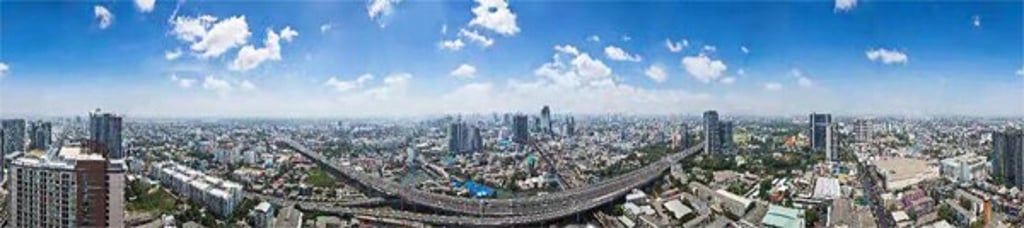
Magnificent though the view is – Guo knows because she sent up a drone up to take pictures – she is hesitant to show it off too much – understandable, perhaps, given she had to bend some rules to buy here. As a Chinese citizen, Guo is barred from sending money abroad to buy property. Yet, unfortunately for Beijing and its efforts to stem increasing flows of money from leaving the Chinese economy, individual investors like Guo are finding it easy to get around such restrictions. In her case, all it took was a couple of fibs and a willing accomplice. And Guo is far from alone.
CAPITAL FLIGHT
Middle-class investors such as Guo represent the latest front in Beijing’s battle to stem the capital outflows from its economy that last year hit US$640 billion dollars – up from US$118 billion in 2014, according to the Washington-based global association the Institute of International Finance. While Beijing has long been concerned with the efforts of its super rich to move money abroad, the rise of China’s rapidly expanding middle class has put overseas investment within the grasp of a vast new body of people – middle-class workers numbered 200 million people in 2015, accounting for a total wealth of US$28.3 trillion, according to Southwestern University of Finance and Economics.

While capital outflows are an essential part of global trade – when a Chinese teenager buys a second-hand drone from a New Yorker on eBay, for example, he is sending money out of China – too much money going overseas too quickly can hamper a country’s economic stability.