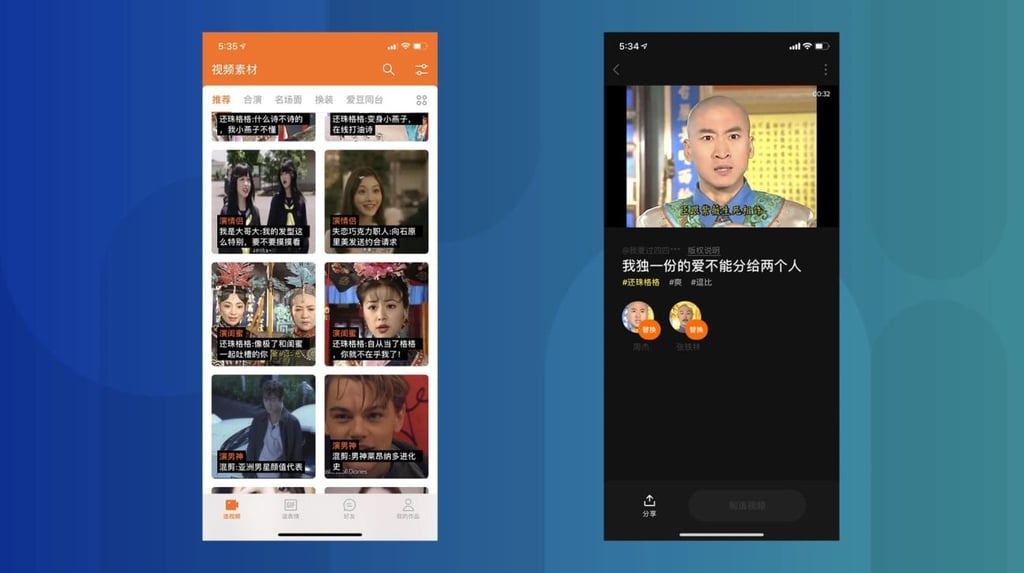
We tested Zao, the viral Chinese deepfake app
Viral face-swapping app blocks the use of Leonardo DiCaprio, Elon Musk and Carrie Lam’s faces -- but not Bill Hader
Upload one selfie, and see yourself starring in famous movies like Titanic -- that’s the premise of Zao, a face-swapping app that’s going viral in China.
Within days of its release, Zao, created by a subsidiary of Chinese live-streaming and dating app Momo, exploded in popularity in China. Then it quickly landed in hot water because of the questionable terms of its user agreement.
The agreement states that the app maker has global rights to all user-generated photos, triggering an outcry on social media. After facing mounting public pressure, the app changed its terms and apologized.
Deepfakes started to gain wide attention in 2017, when the technology became widely accessible and made it easy for people to insert a different face or voice into a video without it being obvious that it’s fake.
After the tech became publicized, many people started to worry about the social threat it poses by making it easy to create authentic-looking clips of news or public officials. But creating deepfakes, while relatively easy, still required a computer and plenty of photos.
Now all you need is a selfie and a smartphone.
So what exactly can you do with Zao? We went through the app to see how it works.