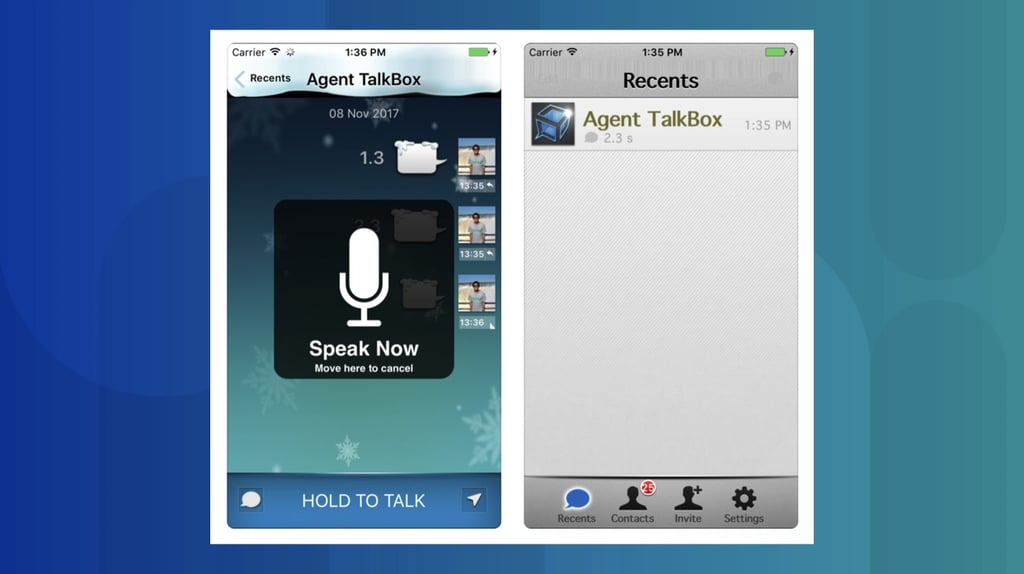
Startup Era is a Chinese TV drama about, you guessed it, working at startups. It follows the fictional tech entrepreneur Guo Xinnian, who’s building a voice messaging app. It’s received bad reviews for a “loose” screenplay and horrible acting, but it’s sparking a lot of discussion in China because it’s based on a real story -- of how another entrepreneur named Guo’s voice messaging app was crushed by WeChat.
The real-world entrepreneurs are Guo Bingxin and Heatherm Huang, who co-founded TalkBox in January 2011, the same time WeChat started. While WeChat at the time only had basic text messaging, TalkBox quickly gained traction because of its “push to talk” feature, which let users communicate with voice messages, a novel feature at the time.
One reason the feature is so important in China? Typing Chinese characters on smartphones isn’t as intuitive as using an English keyboard. Voice messaging isn’t just quicker, it’s vital for many in the older generation who never learned how to type properly.
TalkBox was the first app in China to let users send voice messages. (Picture: TalkBox on the iOS App Store)
Advertisement
TalkBox reportedly attracted over a million downloads in the first three days. Huang told us it received plenty of interest from potential investors, including WeChat’s creator, Tencent. They decided to take a risk and turned down Tencent… only to find out that everybody started copying its key feature. First was MiTalk, a messaging app made by Xiaomi, and then four months later in May 2011, WeChat rolled out an update also adding the same feature.
“I was furious when MiTalk added the ‘push to talk’ feature,” Guo Bingxin said to Chinese media in 2012. And when WeChat also did it later, he realized that “the big guy is here now”.
Advertisement
WeChat, which was based on Tencent’s already dominating QQ network when it was started, soon took off, and TalkBox struggled to stay relevant. Of course, it’s not the only reason WeChat succeeded and TalkBox failed, but it sure helped. After adding the feature, WeChat’s daily user growth went from fewer than 20,000 to more than 50,000, according to a company biography about Tencent, which also documented how WeChat was “inspired” by TalkBox.