University of Macau’s launch pad for success
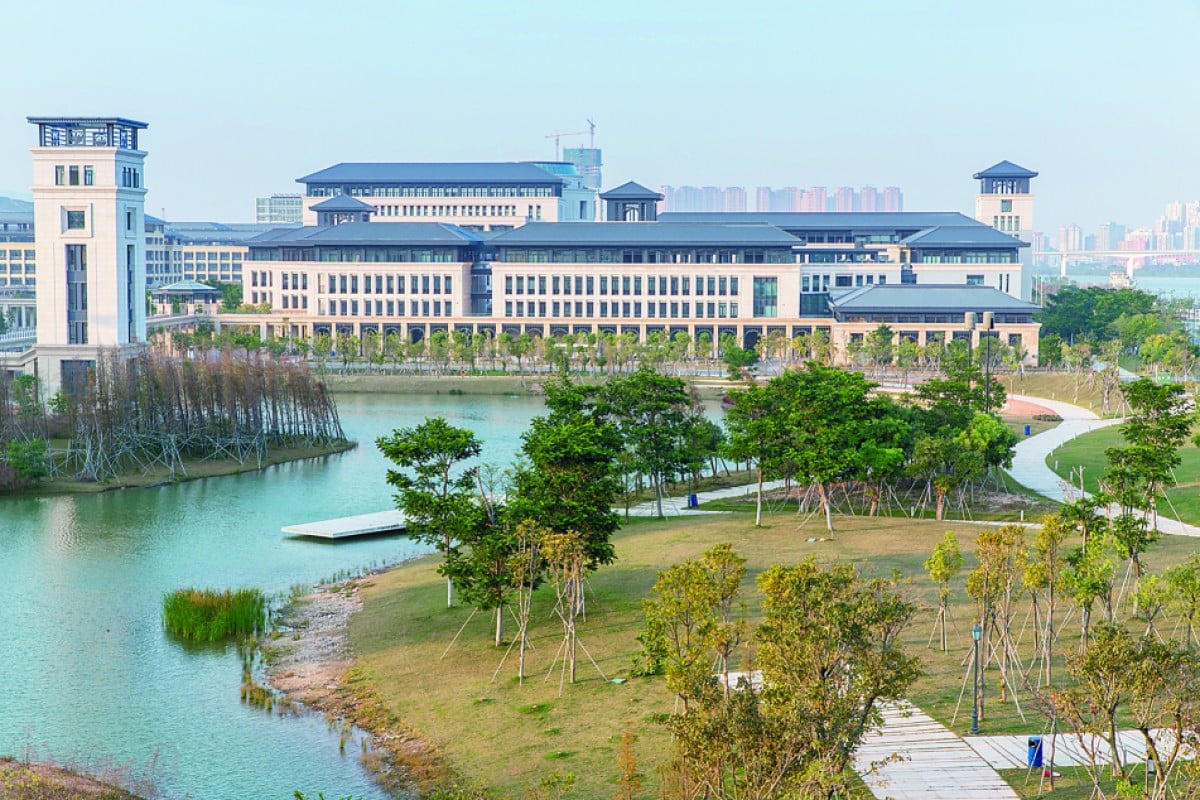
[Sponsored Article] A new chapter in Macau’s higher education history has unfolded with the relocation of the University of Macau (UMacau) to a spectacular new campus on Hengqin Island, Zhuhai, Guangdong Province that was completed in August 2014.
[Sponsored Article]
A new chapter in Macau’s higher education history has unfolded with the relocation of the University of Macau (UMacau) to a spectacular new campus on Hengqin Island, Zhuhai, Guangdong Province that was completed in August 2014.
Rector of UMacau, Professor Wei Zhao describes the University’s milestone development as a successful embodiment of the one-country, two-systems principle upheld by the Macau SAR Government and the Central Government. With the campus equal in size to one thirtieth of the enclave, Zhao is confident UMacau can spearhead higher education and research development in Macau.
As a major university in Macau fully supported by the Macau SAR Government, UMacau is steadily progressing to become an internationally recognised university, while fulfilling its mission to help the city diversify its industries with a broader range of talent.
For students, the new campus means a spacious learning environment with state-of-the-art facilities and access to close to 600 outstanding teaching staff and faculty members. At present, UMacau has seven faculties: arts and humanities; business administration; education; health sciences; law; social sciences; and science and technology.
Professor Zhao says the new campus presents the best ever opportunity for the University to implement initiatives such as the highly acclaimed “4-in-1” pedagogical model. This involves discipline-specific education; general education; research and education internship; and community and peer education, which are all integrated into the undergraduate curriculum for any given discipline.
“We want to broaden the students’ horizons beyond their sole focus on academic studies. From a whole-person development perspective, they not only learn knowledge in the classroom, but also need to discover new knowledge and apply it in daily life in society” says Professor Zhao, a distinguished computing technology expert who has been Rector since 2008. To make it happen, all first-year students are required to spend at least one academic year in one residential college where “they live together, participate in different activities together and learn from each other.” Currently there are eight residential colleges and the number will increase to 12 in the near future.