It’s time for a post-riot reality check
History shows violence is rare on Hong Kong streets

“It would not be killing Hongkongers. It would be killing rioters.”
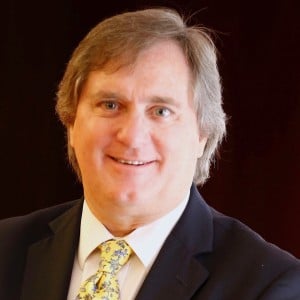
Junius Ho Kwan-yiu
The best scene in the slapstick comedy Police Academy is where a policeman throws a half eaten apple out of his patrol car. It hits a bystander on the head. The bystander turns and punches the man next to him who runs, knocking down an open fire, which lights a gas main – you get the picture. Behind the patrol car, and oblivious to the coppers, the city erupts in flames.
Every riot has a trigger. The trigger factor for the Mong Kok riot was a row between the police and hawkers, amusingly dubbed the Fishball Revolution. As we know, police/hawker disputes have been around for the best part of a century. The police usually creep from behind a corner sending hawkers running like so many cockroaches when the lights go on. This is preferable to using force, which can escalate into violence.
The bricks thrown from the bandwagon after the event can be infinitely more damaging to Hong Kong’s economy
It doesn’t take an Emeritus Professor of Rioting Sociology to see that the Mong Kok riot was unusual. Violent riots elsewhere are common; indeed by the standards of riots in China, London 2011, Occupy Wall Street, and Ferguson Missouri, this one was pretty wimpy. However, this is not something that happens in Hong Kong. Indeed, commentators are using comparisons as far back as the 1966 riots; so rare is a violent fracas on our streets.
Yet the post-riot bandwagon is creaking with the weight of those leaping on to advance their personal agenda. Foremost have been those rushing to pin the name of democracy onto the rioters. Mr. Ho of this camp was merely using extreme language because, as a Johnny-come-lately, he wanted some attention. Get in line, Junius. Beijing’s top man in Hong Kong Zhang Xiaoming, clearly not one for moderate discourse, poured fuel on the fire by branding the rioters as “radical separatists” who were “inclined towards terrorism”. “Thugs” would have sufficed, Mr. Zhang. Ambrose Lee Siu-kwong, long retired former security minister condemned rioters as “beasts”, while describing the police as “tolerant”. “Opportunist bullies” and “restrained” might have been more accurate.