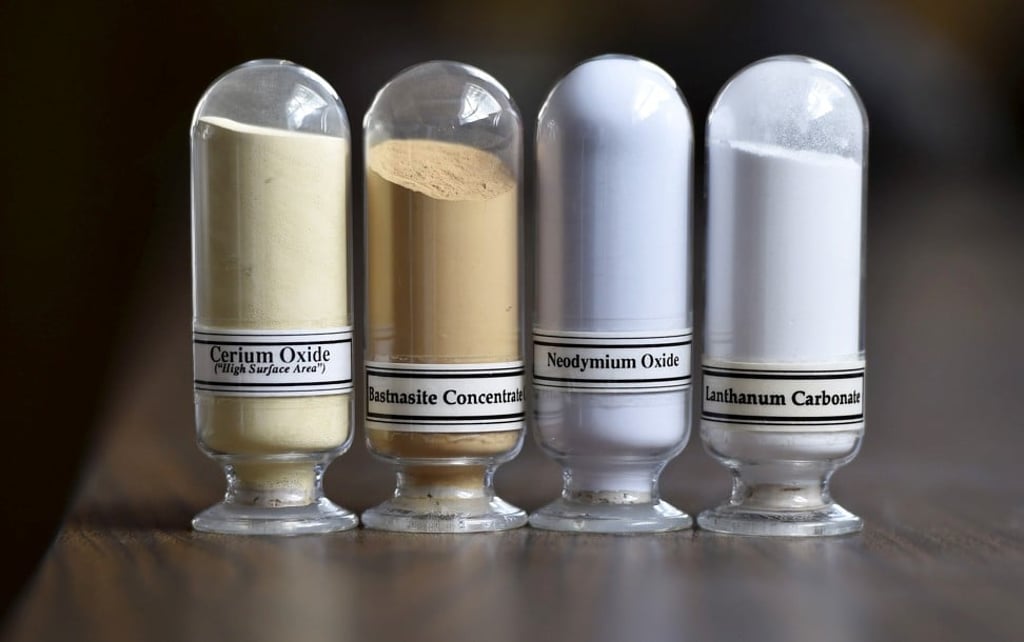
Mine, replace or recycle: can the US, Europe and Japan end reliance on China for rare earths?
- Rare earths prices are still too low to allow recycling, or other alternatives, to seriously compete with Chinese supplies, analysts say
- US knows that even if the trade war is resolved, it still cannot rely on just one source, CEO of Australian rare earths miner Lynas Corporation says

Rare earths will continue their outsize role as “vitamins” of the technology industry because substitutes for the 17 metallic elements cannot be produced quickly enough, or in sufficient amounts, to replace their critical performance-enhancing roles.
The world awoke to the risk of having most of its rare earths in China in 2010, when the country cut off exports to Japan amid a territorial dispute. Although the ban was overturned four years later after a complaint to the World Trade Organisation, the disruption pushed Japan to redouble efforts to find replacements and develop alternatives.
“There’s been a lot of R&D effort into replacements since the price spike in 2011,” said David Merriman, rare earths specialist at Roskill, a London-based metals, minerals and chemicals consultancy. “There are alternatives, but you lose something on cost, size or efficiency.”
This leaves China, which supplies more than 70 per cent of the world’s rare earth oxides, in a dominant position to determine the course of technology for years to come.