Hong Kong sells Kai Tak’s biggest residential plot at discount as city’s unrest drives investors to sidelines and saps risk appetite
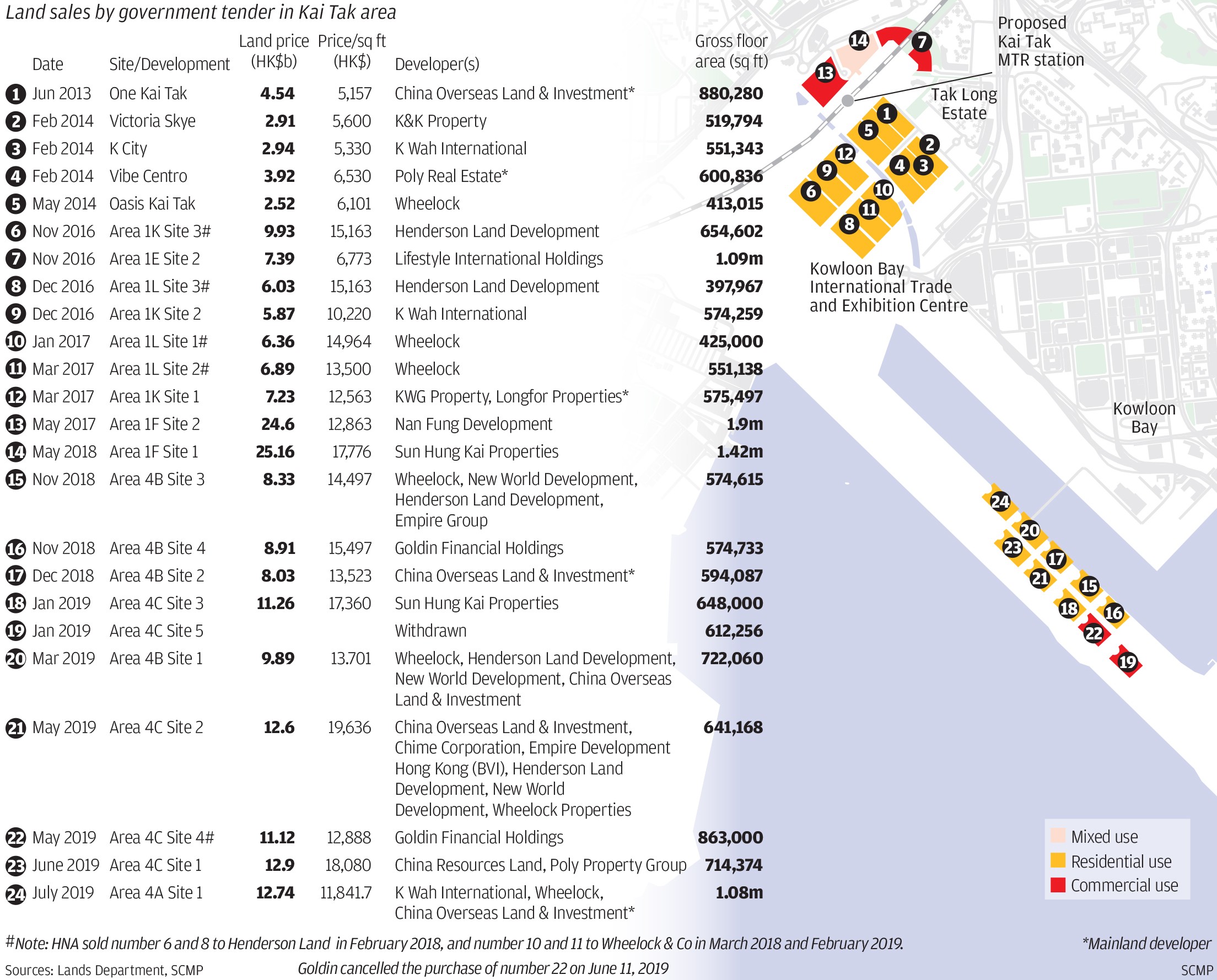
- A consortium of three developers paid HK$12.74 billion for Area 4A Site 1, with the winning bid coming in below the low end of market valuation
- The consortium comprises K. Wah International Holdings, Wheelock Properties and China Overseas Land & Investment

Hong Kong’s government sold the biggest plot of residential land at the former Kai Tak airport at a discount to valuations, as seven consecutive weeks of increasingly violent street protests drove many developers to the sidelines and sapped their appetite for long-term investments.
Dragon Star H.K. Investments, a consortium comprising K. Wah International Holdings, Wheelock Properties and China Overseas Land & Investment, paid HK$12.74 billion (US$1.63 billion), or HK$11,841.70 per square foot, for Kai Tak Area 4A Site 1, according to the Lands Department.
The winning bid came in below the low end of valuers’ expected price range between HK$13 billion and HK$16.1 billion. Wheelock and its partners bought an adjacent plot on the runway at the former Kai Tak airfield sold four months ago for HK$9.89 billion, or HK$13,701 per square foot.
“The price is cheaper than what we paid for last time,” said Wheelock’s chairman Stewart Leung Chi-kin, in a telephone interview with South China Morning Post. “The times are different.”