Advertisement
Hong Kong economy
Business

Hong Kong restaurant turns into co-working space on weekdays to fill room as lunch crowd disappears

  • Second Draft, a gastropub in Tai Hang neighbourhood, keeps lunch menu away to turn itself into co-working space to overcome challenges
  • Lunch earned less than it cost to serve, owner Rohit Dugar says

Reading Time:3 minutes
Why you can trust SCMP
Interior of Second Draft in Little Tai Hang, Hong Kong. Photo: Jonathan Wong
Pearl Liu

Some of Hong Kong’s business community have had to tweak their operating model as local economic conditions worsened. For restaurant operator Rohit Dugar, that means keeping away the lunch menu at Second Draft as crowds dwindled on weekdays.

The gastropub, which Dugar opened in Tai Hang neighbourhood some three years ago used to serve creative fusion dishes on weekdays until January. In May, he decided to turn the idle 2,000 square-foot space in the restaurant into a co-working office.

“Lunch earned less than it cost to serve,” he said. Providing hot-desking facility did not require a lot of additional input and “we have to pay the rent anyway, why not get the space utilised?” he said.

Advertisement

Second Draft now offers its floor space from 9am to 5pm to MilkGarage, a company that manages a network of co-working facilities in 12 locations under a membership programme. The restaurant still serves diners on weekends.
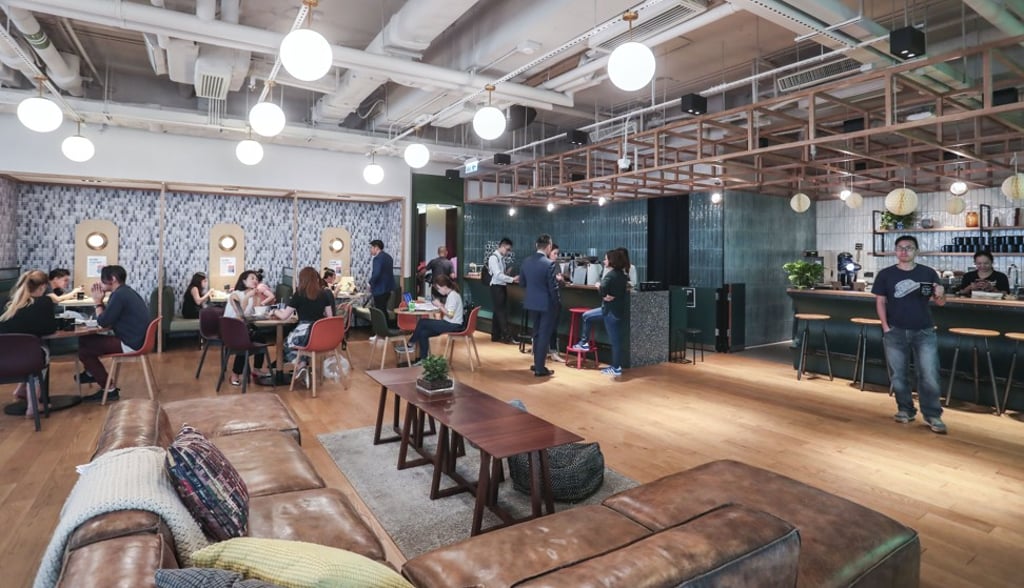
Interior of WeWork, a shared office space, in Causeway Bay. Photo: Jonathan Wong
Advertisement
To be sure, Dugar said the repurpose at Second Draft was meant to offer those “unused hours” to the MilkGarage community to create a buzz and liven up the place, not so much a reaction to recent economic slump. His business group, called Young Master, continues to operate craft brewery and its related ecosystem of taprooms and events, and does not intend to diversify into the competitive co-working business. In Hong Kong, co-working has become an overcrowded market as operators jumped onto the bandwagon. WeWork, recently bailed out by SoftBank, operates eight hubs in key business districts and plans to open four more by the year-end, even if the stumbling start-up is still losing money. The Executive Centre shelved its stock listing plan last quarter. Other operators may have to pull out, according to Savills.

Advertisement
Select Voice
Choose your listening speed
Get through articles 2x faster
1.25x
250 WPM
Slow
Average
Fast
1.25x