Climate change: China’s state firms take lead in advocating carbon neutrality, must do more about own emissions, experts say
- PetroChina, Baowu Steel Group and Air China were among those making pledges as the country marked National Energy Efficiency Promotion Week
- Just four state-owned enterprises in the power and energy sector have made carbon-neutral pledges with clear deadlines, according to Greenpeace

China’s state firms are front runners when it comes to advocating energy conservation and carbon-emission reduction during China’s annual energy-saving week and low-carbon day. But climate experts said such companies must prioritise reducing their own emissions to help the country achieve its national carbon-neutrality goals.
China’s National Energy Efficiency Promotion Week, which ran from June 13 through 19, saw the National Development and Reform Commission (NDRC), the country’s state economic planner, ordering local governments and organisations to launch online and offline campaigns to raise awareness about energy efficiency and promote low-carbon lifestyles.
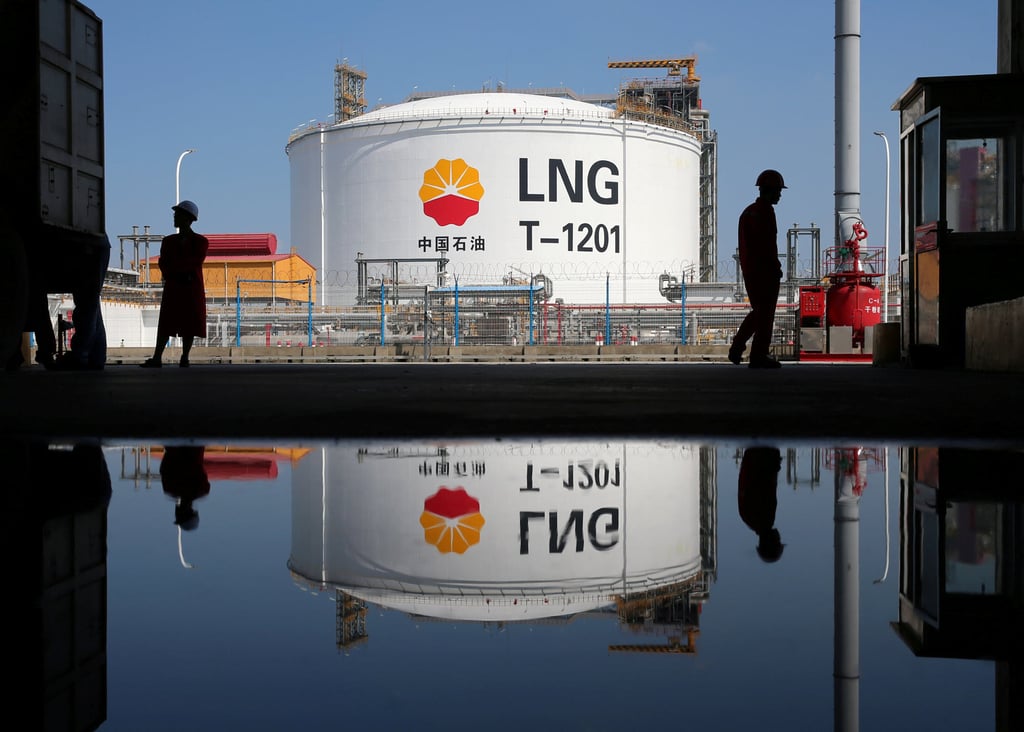
PetroChina, China’s largest oil and gas producer, published a proposal during the week saying it will work with all sectors of society to support energy conservation and reduce emissions. The company aims to hit peak carbon emissions by 2025, five years earlier than China’s overall carbon-peaking goal, and to reach “nearly zero emissions” by 2050, a decade earlier than China’s net-zero goal.
Some other major state-owned enterprises (SOEs), including the world’s largest utility, the State Grid Corporation of China, the world’s largest steelmaker, Baowu Steel Group, and the country’s flag carrier, Air China, also announced proposals the same week to support China’s 2060 carbon-neutrality goal, including promoting clean energy and developing low-carbon technologies.
“These events are essential for raising public awareness, but for any large company the priority should be to bring down carbon emissions from its own operations and supply chains as fast as possible,” Tang Damin, a project manager at Greenpeace East Asia, told the Post.
According to state-owned China Central Television, China’s energy intensity – the amount of energy required to produce a given amount of economic output – fell by 26.2 per cent over the last decade, which is equivalent to reducing energy consumption by about 1.4 billion tonnes of standard coal and reducing carbon-dioxide emissions by about 2.94 billion tonnes.