Climate change: Hong Kong university claims key breakthrough in durable, cost-effective hydrogen fuel cells
- A new formula for the electrocatalyst in fuel cells reduces the use of expensive platinum while enhancing performance and durability, university claims
- Breakthrough would brighten the outlook for fuel-cell electric vehicles as Hong Kong gets ready for net-zero emissions by 2050

Shao Minhua and his team at the Hong Kong University of Science & Technology (HKUST) have generated a new formula that cuts the proportion of platinum in the cell’s electrocatalyst by 80 per cent, according to a paper they published in Nature Catalysis in July.
The new hybrid catalyst succeeded in maintaining its activity at 97 per cent after 100,000 cycles of accelerated stress testing, versus current catalysts that typically lose 50 per cent over 30,000 cycles. A separate test of the new fuel cell did not show any performance decay after running for 200 hours.
The results suggest the fuel cells are the most durable in the industry to date, with the potential of generating up to 30 per cent savings in raw material costs, said Shao, chair professor of the department of chemical and biological engineering.
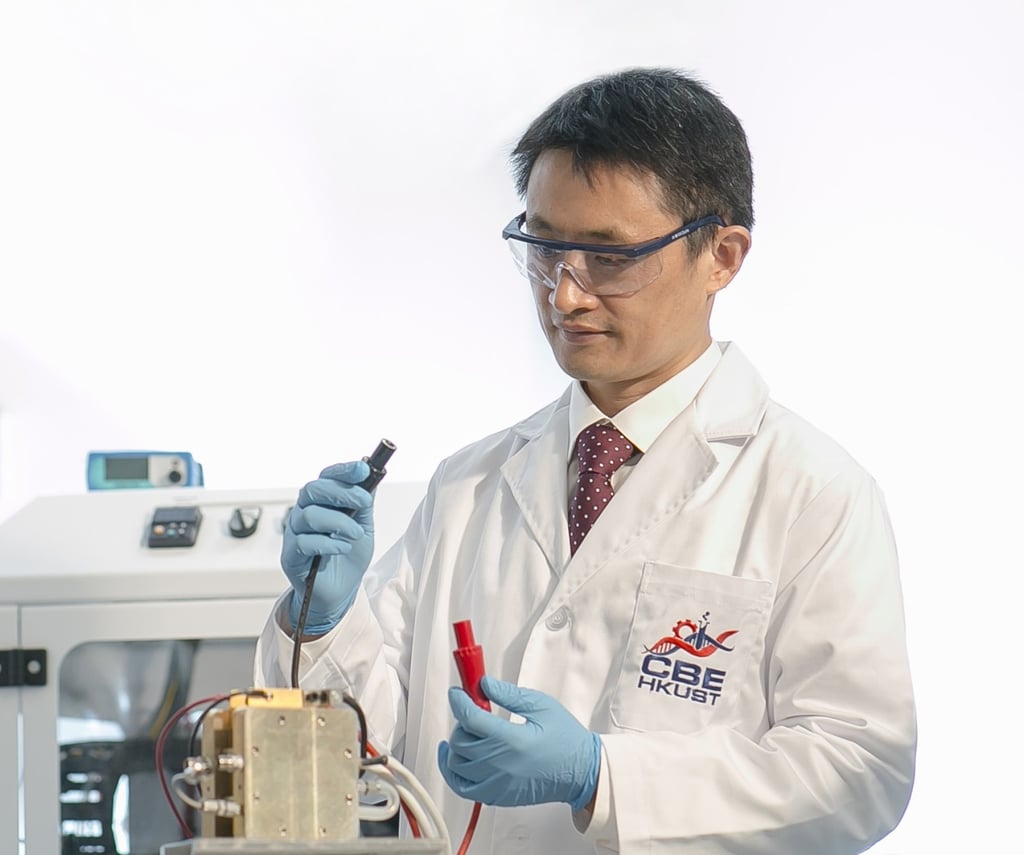
“The research can help improve the lifespan and overall cost effectiveness of hydrogen fuel cells,” Shao told the Post in an interview. “This can contribute significantly to the commercialisation of hydrogen.”