Carbon-neutrality: scientists in China propose new system to achieve ‘negative emissions’ in farms, boost crop yields
- A method for turning crop waste into biofuels can be used to generate clean electricity, CAS researchers said in a journal
- Rice, wheat and corn production occupies more than two-thirds of China’s agricultural land, and is a major emissions culprit

Researchers at the Chinese Academy of Sciences (CAS) have developed an integrated energy system, which extracts bio-oil and bio-gas that can be used to generate clean electricity, they said in a study published in the Nature Food journal last month.
Coupled with greenhouse-gas mitigation measures, such as intermittent irrigation and fewer nitrogen fertilisers, the new system can potentially increase crop yields by 8.3 per cent, lower air pollutants and enhance net environmental and economic benefits, they added.
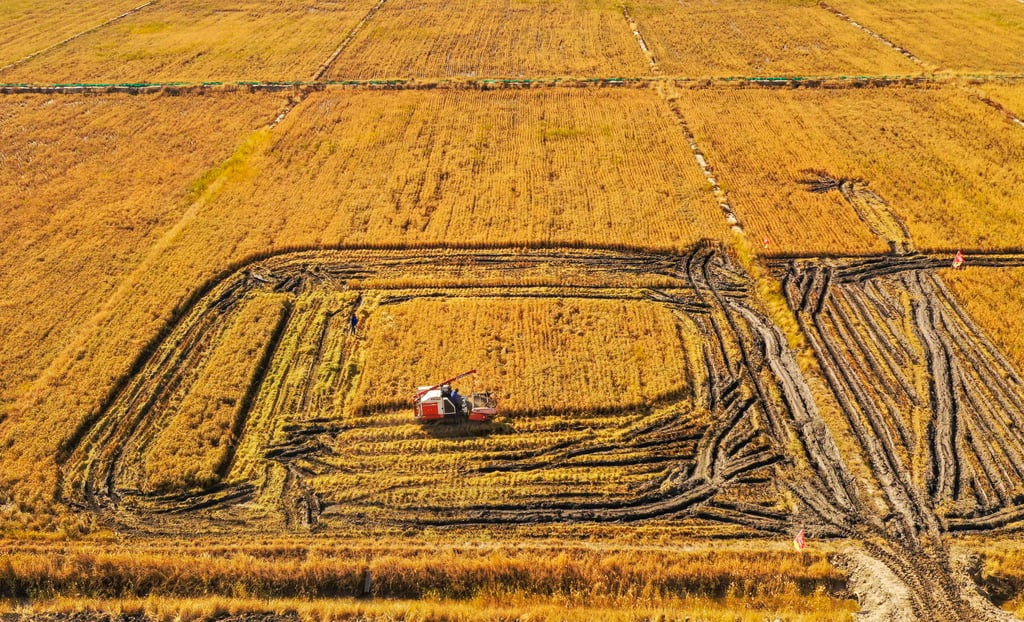
The process can better decrease total GHG emissions, compared with traditional methods of applying crop straw directly to the fields to fix carbon dioxide in the soil, said Xia Longlong, a CAS researcher and the lead author. Using bioenergy created from the process to generate clean power may help drive carbon neutrality and negative emissions, he added.
China, the world’s largest agricultural country and emitter of greenhouse gas, aims to peak its emissions before 2030 and achieve carbon neutrality before 2060. The agricultural systems accounted for 14 per cent of China’s national GHG emissions in 2018.

08:42
The surprising hurdle slowing China’s switch to green energy
The agri-food production sector contributes to more than a quarter of GHG emissions. Rice, wheat and corn production occupies more than two-thirds of China’s agricultural land, a major GHG culprit due to the high methane and nitrous oxide emissions from the intensive use of irrigation water and fertilisers.