ExplainerCould hydrogen be the answer to China’s energy security problem?
- Hydrogen, the zero-carbon fuel which emits only water when burned, can also be used to store energy for future needs and to meet shortages
- The clean alternative features prominently in China’s 2060 carbon neutrality plan due to its eco-friendly uses and applications and could support its energy security needs

As China’s energy transition gathers pace through the expansion of its renewable energy sources – both wind and solar, authorities are faced with the challenge of storing away the surpluses to integrate their supplies into the country’s gigantic power system and ensure grid stability.
Hydrogen, the zero-carbon fuel which unlike fossil fuels emits only water when burned, has a role to play in power load management because it can be used to store energy for future needs and to meet shortages. It features prominently in China’s 2060 carbon neutrality plan due to its eco-friendly uses and applications and has gained attention due to its potential in supporting China’s energy security needs.
Here is what you need to know about hydrogen energy storage:
What is hydrogen energy storage, and how does it work?
Hydrogen is not just fuel which generates power when burned, but is also a storage device for energy.
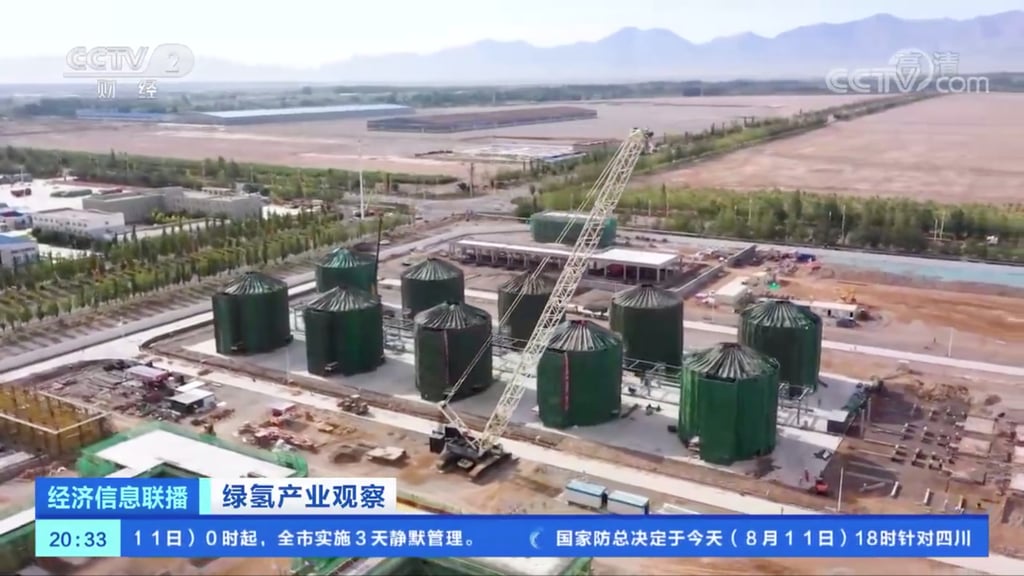
When hydrogen is produced by using clean electricity generated from renewable energy sources such as solar and wind power to split water into hydrogen and oxygen using electrolysers, it is called green hydrogen, the cleanest form of hydrogen.