Transitioning to a circular economy can cut global plastic waste by 80 per cent by 2040: UNEP report
- The shift to a circular economy could prevent 500 million tonnes of emissions annually, saving over US$4.5 trillion in environmental and social costs up to 2040
- Some 227 million tonnes of mismanaged plastic waste could damage our health and ecosystem a year by 2040 if plastic production is left unchecked

The world could reduce plastic pollution by 80 per cent by 2040 if countries and companies implement deep policy changes and transition to a circular economy, according to a report by the United Nations Environment Programme (UNEP) on Tuesday.
The shift to a circular economy could prevent 500 million tonnes of carbon emissions annually, resulting in more than US$4.5 trillion in net savings and avoiding external costs related to health, society and the environment up to 2040, according to the report. It could also lead to a net increase of 700,000 jobs, mostly in low-income countries.
“The way we produce, use and dispose of plastics is polluting ecosystems, creating risks for human health and destabilising the climate,” Inger Andersen, the executive director at UNEP, said in a statement accompanying the agency’s report on cutting global plastic pollution.
Under a business-as-usual scenario, the world is estimated to generate 380 million tonnes of fossil-based plastics and 3.5 million tonnes of bio-based plastics a year by 2040, resulting in 227 million tonnes of mismanaged plastic waste that could damage our health and ecosystem, according to the report.
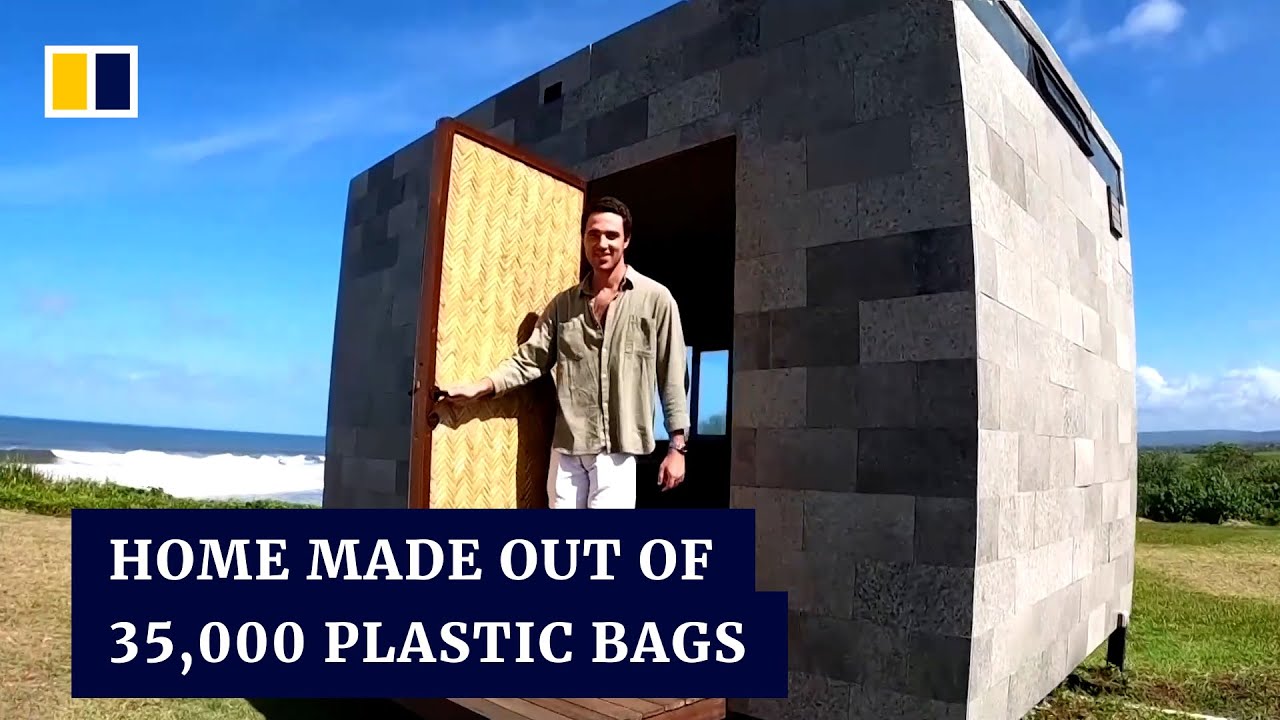
03:54
Bali house built entirely from plastic waste highlights upcycling efforts in Indonesia
To dramatically cut plastic pollution, the report laid out a road map for adopting a circular approach to keep plastic out of the ecosystem and the economy, which can reduce the production of plastic products and generation of plastic waste by 80 per cent by 2040, while increasing the rate of recycled and secondary plastics.