China plans survey to lift share of renewables in power mix
- Wind and solar energy accounts for 36 per cent of China’s power generating capacity, far below what is needed to meet Beijing’s aim to peak carbon emissions before 2030

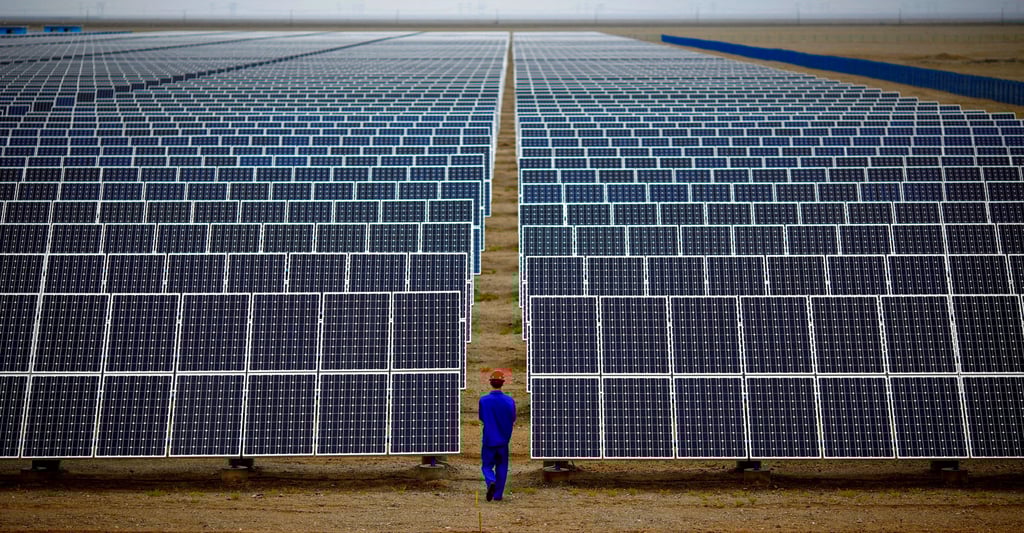
China’s National Development and Reform Commission (NDRC) and five other government departments said they will conduct a study on solar and wind resources in six pilot regions and explore ways to dramatically lift renewable energy’s share in the country’s power generation.
Hebei, Inner Mongolia, Shanghai, Zhejiang, Tibet, and Qinghai have been selected for the surveys that have to be completed by the end of next year, said a joint circular issued by the economic planner National Development and Reform Commission and five other departments on Thursday.
“While wind and solar capacity has experienced rapid growth and now accounts for 36 per cent of national power generating capacity, it is far from what is needed to meet the nation’s goals to peak carbon emissions before 2030 and reach carbon neutrality by 2060,” it said. “A detailed survey is urgently needed to facilitate projects and power grids development.”
The survey aims to assess the renewable energy deployment in these regions, evaluate the quantity of energy resources a region possesses and analyse the potential for wind and solar energy development, according to the document.
Lauri Myllyvirta, senior fellow, Asia Society Policy Institute, said the new survey could establish a comprehensive inventory of solar and wind farms that are in operation or under construction.
It is also needed because improved technology has made wind turbines more powerful which allows their installation at higher altitudes and in offshore areas, while land use changes and their impact on project potential can also be studied.