Hong Kong’s Hang Seng Bank beats forecasts with 23 per cent profit rise, says to expand fintech
Higher interest income and fee income from stockbroking and fund sales as well as lower bad debts contribute to the improved results

Hong Kong’s Hang Seng Bank, a subsidiary of HSBC, reported a 23 per cent rise in net profit for 2017, beating expectations, helped by higher interest income and fee income from stockbroking and fund sales as well as by lower bad debts.
Profit rose to HK$20.02 billion (US$2.6 billion), higher than a consensus forecast in a poll of analysts by Thomson Reuters of a 16.5 per cent rise to HK$18.88 billion.
The bank said there would be challenges ahead, but it would target fintech as a way to drive growth, after recently introducing a chatbot to answer customer queries.
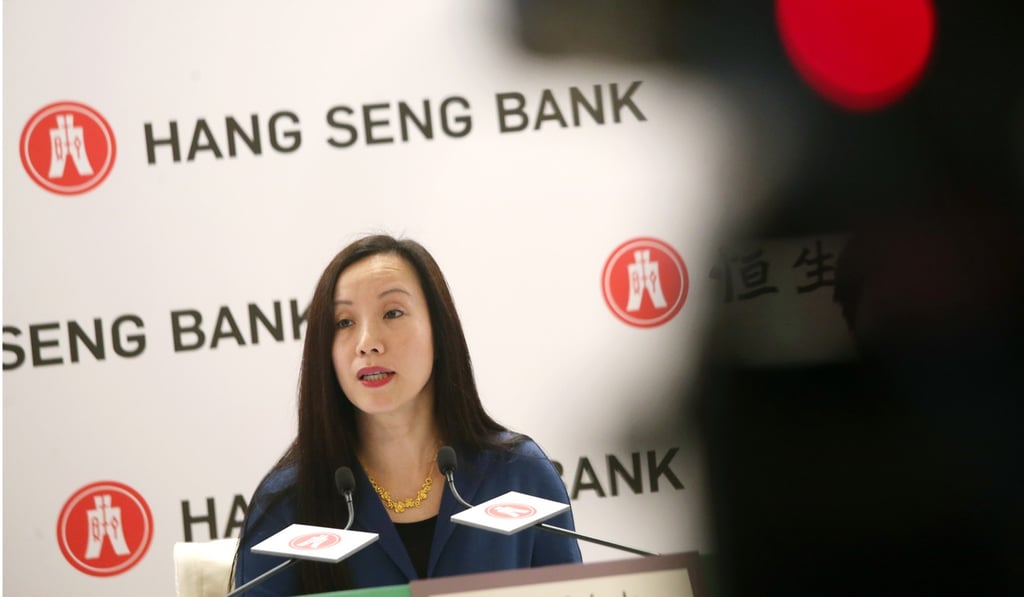
“The global economy regained momentum during 2017 and this has continued into the new year. At the same time, the impact of ongoing economic adjustment in mainland China and potential future shifts in international trade policies may create new challenges for business,” Louisa Cheang Wai-wan, chief executive of Hang Seng Bank, said in a media briefing on Tuesday.
“As Hong Kong’s leading domestic bank, we will launch more fintech initiatives that align with our customer-centric business strategy to help drive in a new era of ‘smart banking’ in our city,” she said.
Earnings per share were up 24 per cent to HK$10.30. It will pay a final dividend of HK$3.10, bringing the full year dividend to HK$6.70, up from HK$6.10 in 2016. Cheang said the bank would continue to pay higher dividends if profitability growth continued. It has a dividend payout ratio at about 64 per cent.