How much is a Chinese gentleman’s word worth? Bondholders will soon find out

China’s fast-growing dollar-bond market is facing a fresh test as investors that counted on a type of credit-protection pledge seldom seen elsewhere find out just what those promises actually mean.
So-called keepwell provisions, disproportionately seen in the offshore Chinese debt market the past several years, are a sort of gentleman’s agreement - a commitment to maintain an issuer’s solvency which stops short of a payment guarantee from the parent company.
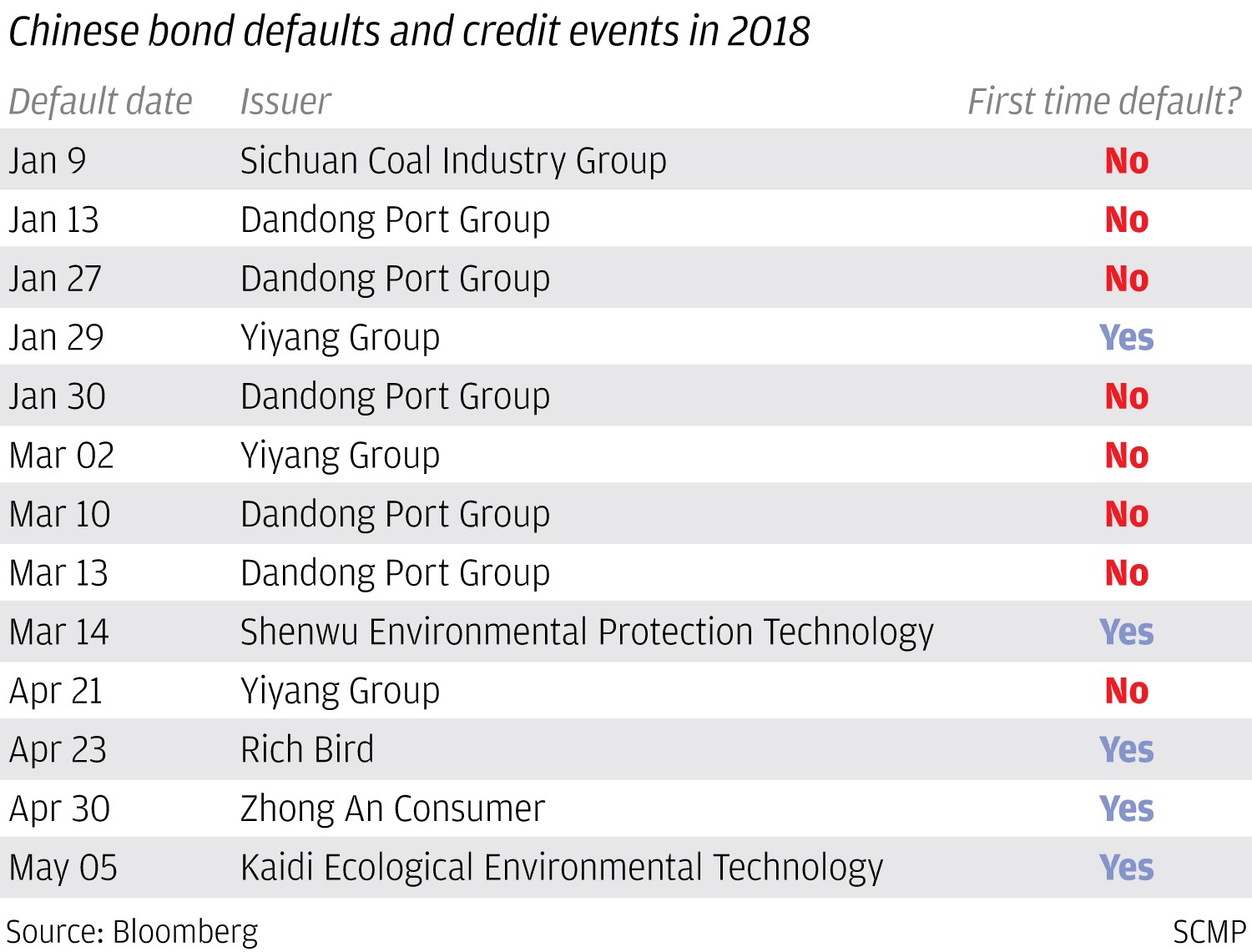
Now, two issuers of debt with keepwell provisions, China Energy Reserve & Chemicals Group and CEFC Shanghai International Group have defaulted on their dollar notes in May. They are among the region’s first defaults to carry such agreements, according to Goldman Sachs, and investors are about to discover whether they provide the benefit that was promised.
“It would be a good test and may provide a precedence for offshore investors,“ said Steve Wang, deputy head of research, BOC International Holdings. He expects guarantees to be a more standard choice with the further opening of the Chinese capital market.
Chinese issuers have total about US$100 billion of notes outstanding with keepwell agreements, accounting for about 80 per cent of such dollar issued bonds globally, according to data compiled by Bloomberg.
Unlike guarantees, keepwell arrangements aren’t necessarily enforceable as a legal obligation, according to David Kidd, a partner at Linklaters, who focuses on restructuring and insolvency. “It offers some support, but when it comes to a default, the real question is whether there is an enforceable obligation.”