China’s central bank to sell US$4.3 billion worth of yuan-denominated securities, slowing currency devaluation
- Bill issuance in Hong Kong seen as most efficient way to absorb offshore liquidity and prevent further depreciation of yuan
- Traders need to defend worst-case scenarios, especially on the yuan as the bill issuance drains liquidity from offshore markets, analyst says

China’s central bank will sell 30 billion yuan (US$4.3 billion) worth of short-term yuan-denominated securities in Hong Kong next week, signalling its plan to absorb offshore liquidity and cushion against further depreciation of its currency versus the US dollar.
“It is a clear message that the PBOC is preventing the yuan from sharp devaluation, and that China does not want to materialise the yuan as a weapon this early,” said Zhou Hao, an economist at Commerzbank AG in Singapore.
The bill issuance was seen by the market as the most efficient way to absorb offshore liquidity and dampen down speculation that would otherwise drive the yuan to depreciate faster. The move will be a carbon copy of liquidity tightening operations in the offshore market in February, May and June this year, as the central bank sought to prevent an overly-rapid decline in the yuan.
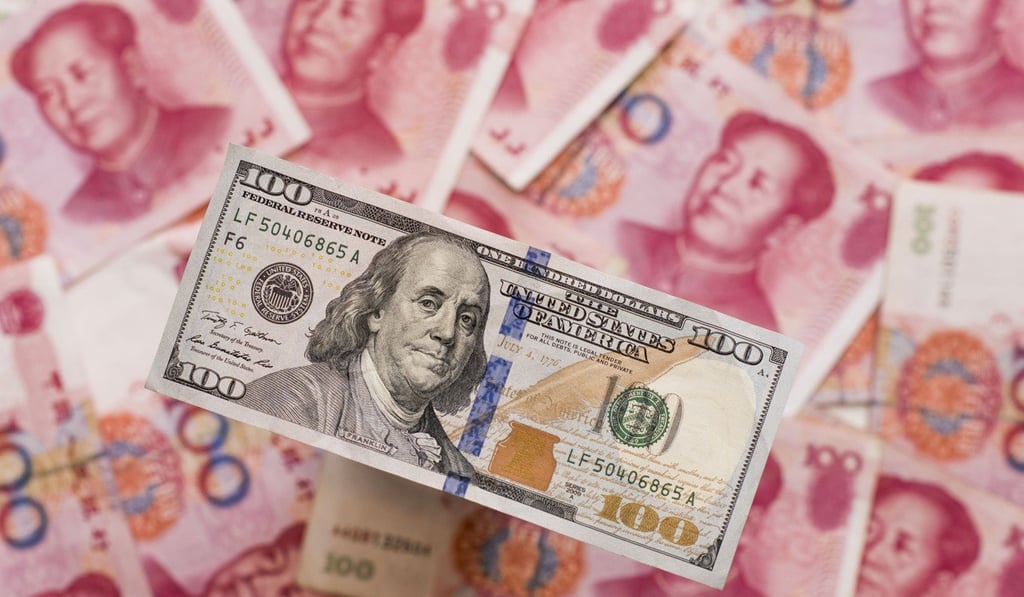
China caught the market by surprise on Monday, as its onshore and offshore currency weakened beyond 7 against the US dollar, a psychologically important threshold for traders, even as most analysts believe Beijing wants to avoid a currency war with the US.