BeiGene’s Shanghai stock debut flops as excessive premium, running losses keep investors at bay
- Stock closes 16.4 per cent lower after plunging as much as 19 per cent in intraday trading following its US$3.4 billion onshore stock offering
- Stock still trades at 22 per cent premium over its Hong Kong-listed securities, versus the market average of 39 per cent in 2021

The stock declined as much as 19 per cent before ending 16.4 per cent lower at 160.98 yuan on Wednesday. The biotech company raised 21.6 billion yuan (US$3.4 billion) by selling 115 million new shares at 192.60 yuan each, making it the biggest stock offering on the city’s Star Market this year.
Following Wednesday’s closing prices, the onshore shares trade at 21.8 per cent above its so-called H shares, or Hong Kong-listed securities. They fell 7.6 per cent to HK$162, or the equivalent of 132.14 yuan in Hong Kong. On average, shares of mainland companies trade at about 39 per cent premium this year over their own securities in Hong Kong, according to Bloomberg data.
Beigene’s Shanghai IPO was preceded by a 20 per cent slide this month in both its Hong Kong- and Nasdaq-listed shares. Those jitters prompted retail investors to abandon around 1 million IPO shares worth about 199 million yuan before its debut.
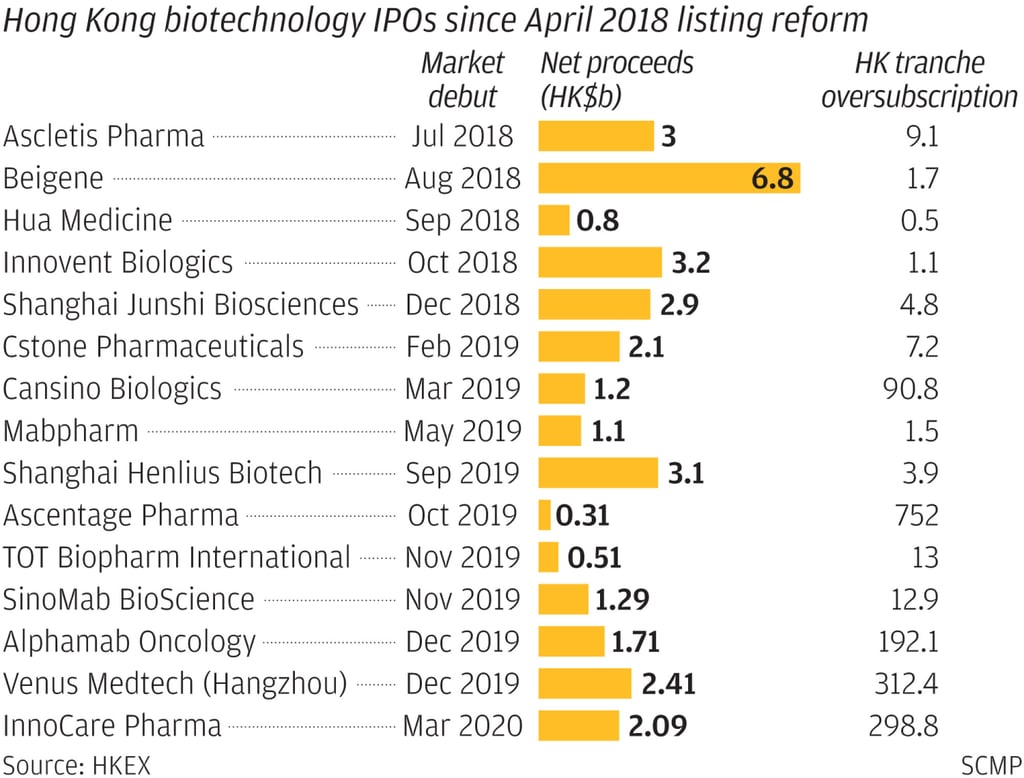
Still, the Beijing-based biotech firm remains unprofitable. It has accumulated losses of 30 billion yuan up to June 30, according to its prospectus, adding that losses may widen in the short term.