Standard Chartered lifts 2030 earnings target to 18% with Hong Kong at core: CEO Winters
Bank refines 2030 profit plans, citing city’s role as a superconnector in wealth and global capital flows, with automation trimming costs

Investors welcomed the plan, sending the bank’s shares up as much as 4.4 per cent to HK$205.20 in early afternoon trade on Tuesday, before closing 2.3 per cent higher at HK$201.20. The stock outperformed the benchmark Hang Seng Index, which rose 0.5 per cent.
The London-headquartered lender, which focuses on emerging markets in Asia, the Middle East and Africa, is aiming for a 15 per cent return on tangible equity in 2028 and 18 per cent in 2030, up from 11.9 per cent in 2025. Growth will be driven by wealth and cross-border business, alongside a 15 per cent cut in back-office headcount through automation by 2030.
Winters unveiled the new targets at a media briefing on Tuesday morning ahead of an investor event in Hong Kong, describing the city as “extremely important” and a “key growth driver” in Standard Chartered’s strategy.
“Hong Kong is our home market. It is our biggest market and fastest-growing market,” he said. “Standard Chartered is a superconnector, connecting our clients of 55 markets to each other, and Hong Kong is at the centre of a lot of that network flow and wealth flows.”
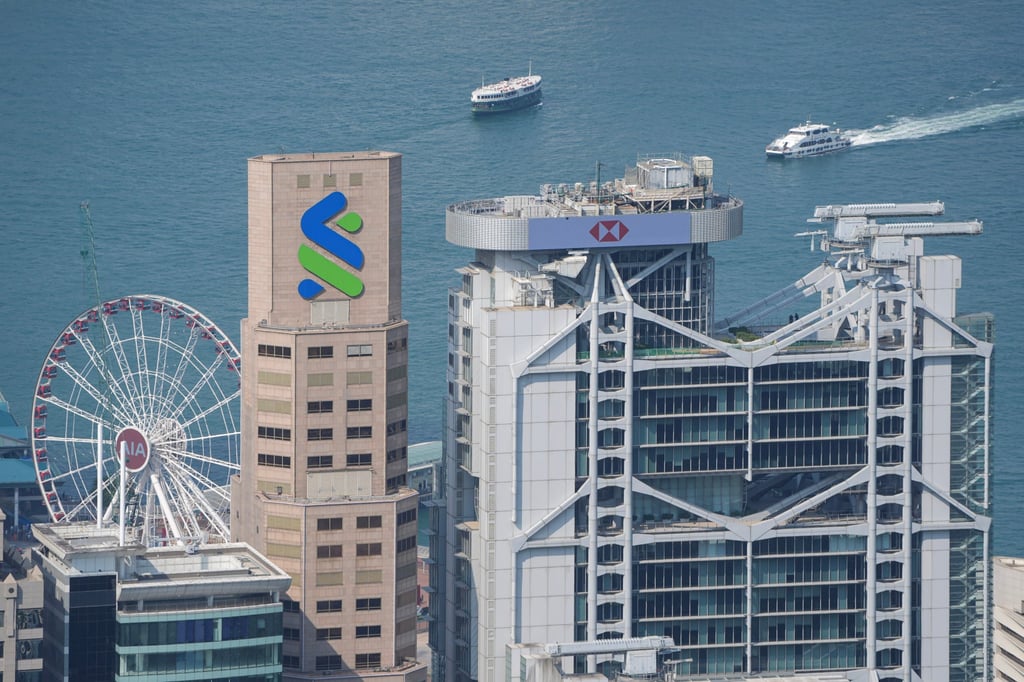
Winters added that Hong Kong was no longer just a gateway to and from mainland China, but now played a bigger role in global trade and capital flows between Asia, Europe and Africa.