-
Advertisement
China-Philippines relations
BusinessChina Business

Manila’s new tax on gaming operators could drive office vacancy rates to near two-decade high

  • New law may make the Philippines less attractive and lead to some Pogos leaving the country, Cushman executive says
  • Tax on Pogos may lead to slower recovery in the entire office sector: KMC Savills

Reading Time:2 minutes
Why you can trust SCMP
Manila’s financial district. Even before the new tax the Pogos were fleeing the Philippines because of Covid-19, which is partially to blame for the rise in the vacancy rates in Metro Manila. Photo: AFP
Cheryl Arcibal
A new tax on local and foreign online gaming operators and their employees in the Philippines is likely to drive away Chinese gaming operators and could push overall office vacancy rates to almost a two-decade high.
These firms, which are collectively known as Philippine offshore gaming operators (Pogos), currently occupy an estimated 316,000 square metres of office space in Manila and the surrounding cities, together known as Metro Manila, according to KMC Savills. As of the end of 2019, these firms occupied 1.26 million square metres in the Philippines’ national capital region. In the country as a whole, they currently occupy an estimated 800,000 square metres, according to Cushman & Wakefield.

“The new law may make the Philippines less attractive and influence the decision of some Pogos to leave the Philippines in the near term. The current 12.2 per cent office vacancy rate is the highest since the onset of the global financial crisis in the fourth quarter of 2009. By the end of 2021, we expect vacancy rates to further increase to 17 per cent to 18 per cent, which is going to be the highest in 17 years,” said Claro Cordero Jnr, director of research, consulting and advisory services at Cushman in the Philippines. “With the new and expanded tax regulations, both on the operations and employment of foreign nationals, Pogos may decide to locate in other jurisdictions.”

Advertisement
The law’s enactment is significant as even before the new tax, Pogos were fleeing the Philippines because of the Covid-19 pandemic, which is partially to blame for the rise in the vacancy rates in Metro Manila. More than half of the 60 registered Pogos have closed operations during the pandemic, according to KMC Savills.

“While the entire office sector has not yet recovered, the tax requirement from Pogos may lead to slower recovery,” said Michael McCullough, KMC Savills’ managing director.
Advertisement
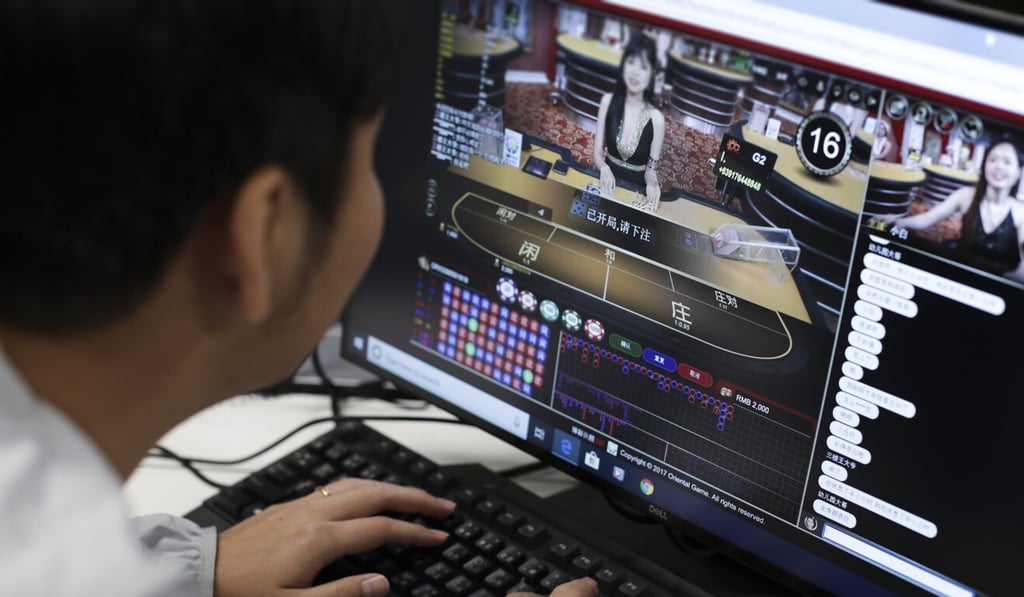
An online gambling website in the Philippines. More than half of the 60 registered Pogos have closed operations during the pandemic. Photo: Tory Ho
Advertisement
Select Voice
Select Speed
1.00x